Understanding the conservation of momentum is critical for anyone studying physics, whether you're a student aiming to ace your exams or a professional looking to sharpen your understanding of fundamental principles. The conservation of momentum equation is a powerful tool that describes how the momentum before an interaction between objects is equal to the momentum after the interaction, assuming no external forces are acting on the system. This guide provides a step-by-step approach to mastering this concept with practical applications, tips, and problem-solving advice to ensure you grasp both the theory and real-world utility of the conservation of momentum.
Introduction to the Conservation of Momentum
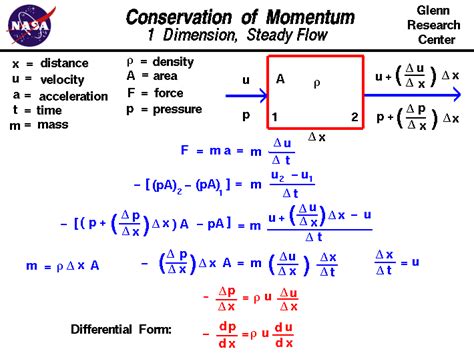
In physics, the law of conservation of momentum states that the total momentum of a closed system remains constant if no external forces act upon it. This principle is crucial in analyzing collisions and explosions in physics. The equation can be expressed as:
m1 * v1i + m2 * v2i = m1 * v1f + m2 * v2f
Where:
- m1 and m2 are the masses of the two objects
- v1i and v2i are the initial velocities of the objects
- v1f and v2f are the final velocities of the objects
This principle is applicable in various scenarios, from simple toy car collisions to complex astrophysical events.
Quick Reference
Quick Reference
- Immediate action item: Start by identifying if the system is isolated (no external forces).
- Essential tip: Use the equation m1 * v1i + m2 * v2i = m1 * v1f + m2 * v2f to calculate final velocities in collision problems.
- Common mistake to avoid: Confusing conservation of momentum with conservation of energy; they are different principles.
Understanding and Applying the Conservation of Momentum
The first step to mastering the conservation of momentum equation is understanding its application in different contexts. This section dives deep into how to use the equation for both elastic and inelastic collisions.
Step-by-Step Guidance for Elastic Collisions
Elastic collisions are those in which both momentum and kinetic energy are conserved. To solve problems involving elastic collisions:
1. Identify the initial and final conditions: Note the masses and initial velocities of the objects involved.
2. Apply the conservation of momentum equation: m1 * v1i + m2 * v2i = m1 * v1f + m2 * v2f
3. Use the conservation of kinetic energy: (1⁄2)m1 * v1i^2 + (1⁄2)m2 * v2i^2 = (1⁄2)m1 * v1f^2 + (1⁄2)m2 * v2f^2
4. Solve the equations simultaneously: Use algebra to find the unknown final velocities.
For example, consider two ice skaters pushing off each other on a frictionless ice rink:
- Skater 1 has a mass of 60 kg and an initial velocity of 2 m/s.
- Skater 2 has a mass of 40 kg and is initially at rest.
Applying the conservation of momentum:
60 * 2 + 0 = 60 * v1f + 40 * v2f
For kinetic energy conservation:
60 * (2^2) + 0 = 60 * (v1f^2) + 40 * (v2f^2)
Solving these equations simultaneously gives you the final velocities of both skaters.
Solving Inelastic Collision Problems
In inelastic collisions, only momentum is conserved, not kinetic energy. To tackle inelastic collision problems:
1. Identify initial conditions: Note masses and initial velocities.
2. Use conservation of momentum: m1 * v1i + m2 * v2i = m1 * v1f + m2 * v2f
3. **Calculate final velocity using the above equation.
For example, if a 1000 kg car traveling at 5 m/s collides with a stationary 2000 kg car:
1000 * 5 + 0 = (1000 + 2000) * vf
Solving this gives:
5000 = 3000 * vf
vf = 5000 / 3000 = 1.67 m/s
The combined mass travels at 1.67 m/s after the collision.
Practical Examples for Mastery
To put your understanding of the conservation of momentum into practice, let’s explore a few real-world examples:
Example 1: Pool Ball Collision
Imagine you are playing pool, and the 8-ball (mass 0.2 kg) is moving towards the stationary 6-ball (mass 0.2 kg). The 8-ball is traveling at 2 m/s. After the collision, the 8-ball comes to rest, and the 6-ball moves at 2 m/s.
Let’s check the conservation of momentum:
0.2 * 2 + 0 = 0 + 0.2 * v
0.4 = 0.2 * v
v = 0.4 / 0.2 = 2 m/s
Indeed, the momentum is conserved, and the 6-ball moves at 2 m/s after the collision.
Example 2: Space Station Reboost
A tiny robot (mass 1 kg) is docked on a space station (mass 10000 kg). The robot ejects in the opposite direction at 10 m/s. To determine the new velocity of the space station, apply the conservation of momentum:
1 * 0 + 10000 * 0 = 10000 * v_space + 1 * (-10)
0 = 10000 * v_space - 10
v_space = 10 / 10000 = 0.001 m/s
The space station acquires a tiny speed of 0.001 m/s due to the robot’s ejection.
Practical FAQ
How can I differentiate between elastic and inelastic collisions?
Elastic collisions conserve both momentum and kinetic energy. Inelastic collisions conserve only momentum. A quick way to identify them is to observe whether the objects stick together after collision (inelastic) or bounce off each other (elastic). Another indicator is the post-collision kinetic energy—if it remains the same, it’s an elastic collision.
What are some common mistakes to avoid when solving momentum problems?
A frequent mistake is confusing momentum conservation with energy conservation. Remember that while momentum always remains constant in a closed system, energy transforms or changes form (kinetic to potential, thermal, etc.) and doesn't always remain constant.
Another error is incorrectly labeling masses and velocities; ensure they correspond correctly to the objects in question and account for direction (positive and negative signs for velocity).
Tips, Best Practices, and How-To Information
Here are some additional tips to help you master the conservation of momentum:
- Draw diagrams: Visual representation of the scenario often clarifies the direction of velocities and helps in tracking changes.
- Use consistent units: Always work in the same unit system (SI units are