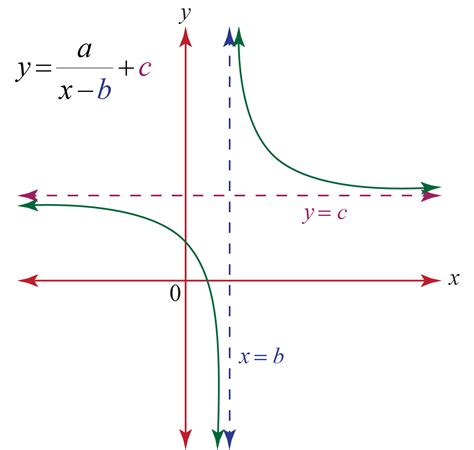
Understanding the intricacies of rational functions can be overwhelming, especially when it comes to simplifying them. The key is to identify and streamline the components of these functions to make them easier to understand and work with. This guide provides step-by-step guidance, practical solutions, and tips for effectively simplifying rational functions, aiming to address common user pain points and elevate your mathematical skills.
Why Simplify Rational Functions?
Simplifying rational functions is essential for several reasons. First, it makes it easier to perform operations like addition, subtraction, multiplication, and division of these functions. It also aids in graphing and analyzing their behavior more effectively. Moreover, simplifying rational functions often reveals important characteristics like intercepts and asymptotes, which are critical for understanding their behavior over various intervals.
The process of simplification typically involves factoring both the numerator and the denominator, and then canceling out common factors. However, it's not always straightforward, and sometimes requires careful attention to avoid missing any possible simplifications.
Quick Reference
Quick Reference
- Immediate action item with clear benefit: Start by factoring both the numerator and the denominator.
- Essential tip with step-by-step guidance: After factoring, cancel out the common factors that appear in both the numerator and the denominator.
- Common mistake to avoid with solution: Don’t forget to check for restrictions on the domain; factors that cancel out might cause the original denominator to be zero.
Step-by-Step Guide to Simplify Rational Functions
Let’s break down the process of simplifying rational functions into digestible steps.
Step 1: Factor the Numerator and Denominator
The first step in simplifying a rational function is to factor both the numerator and the denominator as much as possible. Here’s a practical example:
Suppose you have the rational function:
f(x) = (x2 - 4)/(x2 - 2x)
Start by factoring the numerator and the denominator:
f(x) = (x + 2)(x - 2)/(x(x - 2))
Step 2: Cancel Out Common Factors
Next, identify and cancel out any common factors from both the numerator and the denominator. In our example:
f(x) = (x + 2)(x - 2)/(x(x - 2)) = (x + 2)/x
Here, we canceled out the (x - 2) factor, which was common in both parts.
Step 3: Identify and Document Domain Restrictions
It’s crucial to identify any values of x for which the original function might be undefined, as these restrictions might be lost after simplification. In our example:
The original function has a restriction x ≠ 2, because when x = 2, the denominator (x - 2) becomes zero. However, after cancellation, this restriction is lost.
But since we initially canceled out (x - 2), we need to re-apply the restriction.
Therefore, the simplified function is:
f(x) = (x + 2)/x, x ≠ 2
Practical Examples of Rational Function Simplification
Here are more practical examples to deepen your understanding.
Example 1: Simplifying a Complex Rational Expression
Consider the rational function:
f(x) = ((x + 1)/(x - 3)) * ((x - 3)/(x + 1))
Notice that we have common factors in the numerator and denominator:
f(x) = (x + 1)/(x - 3) * (x - 3)/(x + 1)
Each term simplifies as follows:
f(x) = 1
Here, we canceled out the (x + 1) and (x - 3) factors from both numerator and denominator, simplifying the function to 1. However, we must consider the domain restrictions of the original function, which are x ≠ 3 and x ≠ -1.
Example 2: Handling Fractions Within Fractions
Consider this rational function:
f(x) = ((x^2 - 4)/(x^2 - 9))/((x + 2)/(x - 3))
First, factor each component:
f(x) = ((x + 2)(x - 2)/(x + 3)(x - 3))/((x + 2)/(x - 3))
Next, notice we can cancel out (x + 2) and (x - 3) in both numerator and denominator:
f(x) = (x - 2)/(x + 3)
Practical FAQ
How do I know if a rational function can be simplified?
A rational function can be simplified if it has factors that are common in both the numerator and the denominator. To determine if it can be simplified, start by factoring the numerator and the denominator. If any common factors appear, you can simplify the function by canceling these out.
What are the potential pitfalls when simplifying rational functions?
A common pitfall is overlooking domain restrictions. When you cancel factors, you might lose the information about where the function is undefined. Always recheck the original function’s domain after simplifying to ensure you don’t miss any restrictions. Additionally, watch out for signs and terms that might cancel incorrectly.
Can a rational function be simplified without any domain changes?
Yes, a rational function can be simplified without changing its domain if the factors that are canceled out do not result in the original function becoming undefined at any point. Always verify this by looking at the original denominator’s factors and ensuring they are not causing the function to become zero.
By following these steps and tips, you'll be well on your way to mastering the simplification of rational functions. Remember, the key is to approach each function methodically, paying close attention to both the mathematical operations and the domain restrictions.
Embrace the journey of simplification and soon, it will become a straightforward and insightful process for you.