Understanding incomplete dominance is key to unlocking many real-life genetics secrets. This complex inheritance pattern is often misunderstood, but with a step-by-flower journey through its principles, you’ll see how it shapes various natural phenomena. This guide will unravel the mysteries of incomplete dominance, providing actionable advice and real-world examples that will transform your understanding. We’ll break down intricate concepts into straightforward, practical tips and best practices to help you grasp this fascinating area of genetics.
Understanding Incomplete Dominance
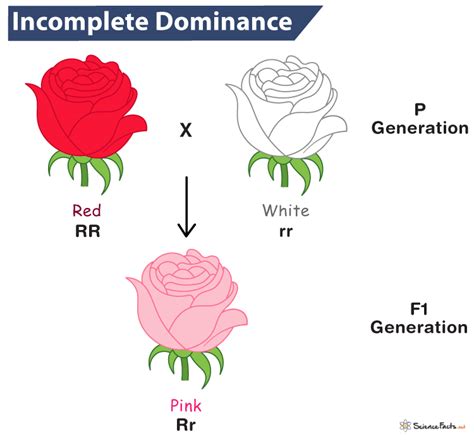
Incomplete dominance occurs when the heterozygous genotype results in a phenotype that is intermediate between the two homozygous genotypes. Unlike complete dominance, where one allele completely masks the effect of another, incomplete dominance creates a blend. For instance, in a classic Mendelian experiment involving flowers, the cross between a red and white flower may result in pink offspring, indicating a blend of red and white colors.
Why This Matters
Understanding incomplete dominance is not just an academic exercise; it has practical applications in fields such as agriculture, animal husbandry, and even human health. For instance, it can help predict the outcome of cross-breeding in plants and animals to produce hybrids with desirable traits. It also provides insight into genetic disorders where such blending effects occur, allowing for better management and understanding of these conditions.
Quick Reference
Quick Reference
- Immediate action item: Look for real-life examples of incomplete dominance, such as the blending of flower colors.
- Essential tip: When studying incomplete dominance, always consider both the visible and hidden traits that might influence the outcome.
- Common mistake to avoid: Do not confuse incomplete dominance with codominance; in codominance, both alleles are fully expressed without blending.
Real-Life Examples of Incomplete Dominance
Let’s dive into some examples where incomplete dominance plays a critical role. By observing these examples, you can gain a clear understanding of how this genetic principle manifests in the real world.
Flowers: The Classic Case
One of the most famous examples of incomplete dominance in nature involves flowers. Consider the cross between a red snapdragon flower and a white snapdragon flower. When these flowers are crossed, the offspring do not exhibit either the red or the white phenotype fully; instead, they produce a pink snapdragon flower. This occurs because the red and white alleles do not completely mask each other; instead, they blend, resulting in pink.
Animal Coat Colors
In some animal breeds, such as the case of certain horses, incomplete dominance is observed in coat colors. The offspring of a chestnut horse (homozygous dominant for red fur) and a white horse (homozygous dominant for white fur) may result in a palomino horse, which has a golden-tan coat color. This blending of traits highlights the concept of incomplete dominance.
Human Eye Colors
While complete dominance often explains eye color inheritance, incomplete dominance can also play a role. For example, the eye color of some individuals may exhibit a blend of blue and brown, showing an intermediate phenotype due to incomplete dominance.
Step-by-Step Guide to Understanding Incomplete Dominance
Decoding incomplete dominance requires a detailed, methodical approach. Here’s how you can break down this concept and apply it to real-world scenarios:
Step 1: Identify the Parents and Their Genotypes
Start by identifying the genotypes of the parents involved in the genetic cross. For instance, in the snapdragon example, the red flower is homozygous dominant (RR) and the white flower is homozygous recessive (rr). However, when we cross these with incomplete dominance, one parent may be heterozygous (Rr) where the red and white alleles blend.
Step 2: Predict the Offspring Genotype
Predict the possible genotypes of the offspring. In incomplete dominance, the heterozygous genotype results in a phenotype that is intermediate between the two homozygous types. Using our snapdragon example, if you cross a heterozygous red (Rr) with a white (rr) flower, you’ll get pink (Rr) offspring because the alleles mix, producing pink.
Step 3: Visualize the Outcomes
Use visual aids like Punnett squares to help you predict the possible phenotypes. For the snapdragon example, a Punnett square will show:
| rr | |
|---|---|
| Rr | Rr |
The result is all pink (Rr) flowers, demonstrating incomplete dominance clearly.
Step 4: Apply Knowledge to Real-Life Situations
Now, apply this knowledge to real-life situations. For example, farmers can use this understanding to produce hybrid plants with desirable intermediate traits. Similarly, breeders can predict and select for specific intermediate traits in animals.
Practical FAQ
What is the difference between incomplete and complete dominance?
In complete dominance, one allele completely masks the effect of another. For example, if you cross a red flower (RR) with a white flower (rr), the offspring will all have the red phenotype (Rr). In incomplete dominance, the heterozygous genotype results in a blend of the two traits. For example, in the snapdragon example, crossing a red (RR) with a white (rr) flower results in pink (Rr) flowers because the red and white traits blend.
Can incomplete dominance occur in humans?
Yes, incomplete dominance can occur in humans. For instance, some people have eye colors that appear to be a blend of blue and brown due to the intermediate expression of genetic traits. It’s important to note that this is relatively rare compared to complete dominance.
How can breeders use incomplete dominance to improve livestock?
Breeders can use incomplete dominance to produce animals with desirable intermediate traits. For example, by selecting for intermediate coat colors in horses or specific traits in cattle, breeders can enhance particular characteristics while avoiding the extremes, leading to healthier and more desirable animals.
With this guide, you now have a comprehensive understanding of incomplete dominance and its practical applications. By recognizing the blend of traits and applying this knowledge, you can better predict and manage genetic outcomes in both natural and human-directed environments. Understanding these principles not only aids in academic pursuits but also has tangible benefits in various practical fields.