Understanding and Calculating the Moment of Inertia for Circular Objects: A User-Focused Guide
Understanding the moment of inertia is essential for engineers, scientists, and hobbyists who engage in projects involving rotational dynamics. For those dealing with circular objects, mastering this concept will help you predict how they behave when torque is applied. This guide offers step-by-step guidance with actionable advice, real-world examples, and practical solutions to your questions. We will walk you through the fundamental principles, how to calculate it, and troubleshoot common issues you may face. Whether you are a beginner or looking to refine your skills, this guide will help you grasp the essentials of the moment of inertia.
The Problem-Solution Opening: Overcoming Rotational Dynamics Challenges
Dealing with circular objects, like wheels, disks, or cylinders, can be challenging, especially when you’re calculating their rotational inertia. The moment of inertia, or the “rotational mass” of an object, determines how much torque is required for a desired angular acceleration. Misunderstanding this can lead to miscalculations that affect the performance and safety of mechanical systems. This guide aims to bridge that knowledge gap by providing clear, actionable steps, practical examples, and expert tips to ensure you accurately calculate and understand the moment of inertia for circular objects.
Quick Reference
Quick Reference
- Immediate action item: Start by identifying the shape and dimensions of your circular object.
- Essential tip: Use the correct formula: I = (1⁄2)mr² for a solid disk and I = mr² for a hoop (where m is mass and r is the radius).
- Common mistake to avoid: Confusing the formula for the moment of inertia; always check if your object is a solid disk, hoop, or a cylinder.
Detailed How-To Section: Calculating the Moment of Inertia for a Solid Disk
When calculating the moment of inertia for a solid disk, it’s crucial to understand the formula and how to apply it correctly. Here is a detailed walkthrough.
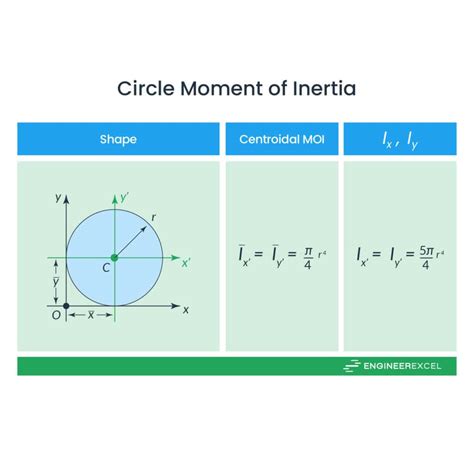
To calculate the moment of inertia for a solid disk, you need to know the mass (m) of the disk and its radius (r). The formula for the moment of inertia (I) of a solid disk rotating about its central axis is:
I = (1/2)mr²
Let’s break this down with a practical example:
Imagine you have a solid metal disk with a mass of 5 kg and a radius of 0.3 meters. To find the moment of inertia:
- Identify the mass (m): 5 kg
- Identify the radius (r): 0.3 meters
- Plug these values into the formula: I = (1/2) × 5 kg × (0.3 m)²
- Calculate the square of the radius: (0.3 m)² = 0.09 m²
- Multiply by the mass: (1/2) × 5 kg × 0.09 m² = 0.225 kg·m²
Therefore, the moment of inertia for this disk is 0.225 kg·m².
Understanding how to apply this formula ensures you can predict how this disk will react to applied torque, which is critical in designing safe and efficient mechanical systems.
Detailed How-To Section: Calculating the Moment of Inertia for a Hollow Hoop
Calculating the moment of inertia for a hollow hoop (or ring) involves a slightly different approach. Here’s a step-by-step breakdown:
The formula for the moment of inertia (I) of a hollow hoop rotating about its central axis is:
I = mr²
To put this into practice, consider the following scenario:
Suppose you have a hollow hoop made of metal with a mass of 3 kg and an outer radius of 0.4 meters. To find the moment of inertia:
- Identify the mass (m): 3 kg
- Identify the radius (r): 0.4 meters
- Plug these values into the formula: I = 3 kg × (0.4 m)²
- Calculate the square of the radius: (0.4 m)² = 0.16 m²
- Multiply by the mass: 3 kg × 0.16 m² = 0.48 kg·m²
Therefore, the moment of inertia for this hollow hoop is 0.48 kg·m².
This calculation is essential for applications like designing wheels or pulleys where rotational dynamics play a critical role.
Practical FAQ
What if the circular object has a different shape, like a cylinder?
When dealing with a solid cylinder, you need to adjust your formula to fit the object’s geometry. For a solid cylinder rotating about its central axis, the formula for the moment of inertia is:
I = (1⁄2)mr²
However, if it’s rotating about an axis through its diameter, the formula changes to:
I = (1⁄12)ml²
Where m is the mass of the cylinder and l is the height. This distinction is crucial because the distribution of mass affects how you calculate the moment of inertia.
Practical FAQ
How can I calculate the moment of inertia for a compound circular object?
If you are dealing with a compound object that combines different circular parts, you need to calculate the moment of inertia for each part separately and then sum them up. This method applies if the parts do not rotate independently. Here’s how:
- Calculate the moment of inertia for each circular part using the appropriate formula.
- Sum the moments of inertia from each part to get the total moment of inertia for the compound object.
- For instance, if you have a system with two disks of different masses and radii, calculate each one’s moment of inertia and then add them together.
This guide has provided detailed steps and practical examples to help you master the calculation of the moment of inertia for various circular objects. By following these instructions, you can accurately determine how a circular object will behave when torque is applied, thereby improving the design and analysis of mechanical systems.