Unlock the Power of Base Ten Blocks: Your Ultimate Learning Tool
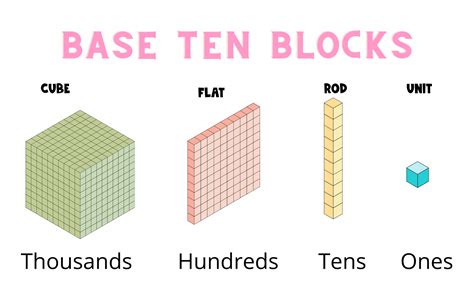
Mastering Base Ten Blocks can revolutionize how you approach math, making it more intuitive and engaging. These versatile blocks, which include units, rods, and flats, can transform abstract numerical concepts into tangible, visual tools that are easy to grasp. Whether you're a student, teacher, or parent, this guide will walk you through every step of the process to make base ten blocks an indispensable part of your math toolkit.
The real challenge often lies in understanding how to use base ten blocks effectively and harnessing their full potential for learning. This guide is crafted to address those very challenges. We’ll dive into step-by-step instructions, practical examples, and common pitfalls to help you master base ten blocks. Let’s start by understanding why this tool is so powerful and how to utilize it to its fullest extent.
Why Base Ten Blocks?
Base Ten Blocks are a powerful educational tool for visualizing and understanding place value and arithmetic operations. They provide a hands-on approach to learning, transforming complex numerical concepts into something tangible and manageable. By using these blocks, learners can gain a more intuitive grasp of the relationships between different place values and the mechanics of addition, subtraction, multiplication, and division. Let's take a closer look at some quick reference tips to get you started:
Quick Reference
- Immediate action item: Start with simple addition and subtraction problems using units and rods. The clearer the problem, the easier it is to transition to more complex concepts.
- Essential tip: Always visualize the problem in terms of place value before breaking it into base ten blocks. This will help in understanding how each block represents tens and ones.
- Common mistake to avoid: Don't overlook the significance of place value. Many students struggle with regrouping, which is crucial for accurate calculations.
Detailed Guide on Using Base Ten Blocks
Let’s delve into the detailed process of mastering base ten blocks.
Step-by-Step Guide to Addition and Subtraction
Addition and subtraction are fundamental operations that become much easier with the help of base ten blocks.
Addition:
To add numbers using base ten blocks, break each number down into units and tens. Start by representing the first number on your workspace with units and rods. Then, add the units and rods from the second number. For instance, to add 27 and 34:
- Break down 27 into 2 rods (20) and 7 units (1)
- Break down 34 into 3 rods (30) and 4 units (4)
- Place these blocks together and regroup if necessary to make it easier to visualize:
| Units | Tens | |
|---|---|---|
| First Number (27) | 7 | 2 |
| Second Number (34) | 4 | 3 |
| 11 | 5 |
Now combine the units and tens:
- 11 units become 1 ten (10) and 1 unit (1)
- Add this ten to the tens column: 5 tens + 1 ten = 6 tens
Your final answer is 61.
Subtraction:
Subtraction involves breaking down numbers into units and tens and then removing the corresponding blocks. To subtract 35 from 47:
- Break down 47 into 4 rods (40) and 7 units (1)
- Break down 35 into 3 rods (30) and 5 units (5)
- Start by removing the units:
| Units | Tens | |
|---|---|---|
| First Number (47) | 7 | 4 |
| Second Number (35) | 5 | 3 |
| 2 | 1 |
Now, remove 5 units from 7 units to get 2 units, and 3 tens from 4 tens to get 1 ten. Thus, the final answer is 12.
Detailed Guide on Multiplication and Division
Multiplication and division are slightly more complex but can be mastered with base ten blocks through strategic visualization and organization.
Multiplication:
To multiply using base ten blocks, break each factor into tens and ones. Multiply each part separately and then add the results together. Let’s say you want to multiply 32 and 4:
- Break down 32 into 3 rods (30) and 2 units (2)
- Break down 4 into 4 units (4)
- Multiply each part separately:
- 3 rods (30) times 4 units (4):
- 3 rods * 4 units = 12 rods (120)
- 2 units (2) times 4 units (4):
- 2 units * 4 units = 8 units (8)
Add these together to get 120 + 8 = 128.
Division:
Division using base ten blocks involves breaking down the dividend into tens and ones and then systematically removing groups of the divisor. For example, let’s divide 56 by 4:
- Break down 56 into 5 rods (50) and 6 units (6)
- Start removing groups of 4:
| Units | Tens | |
|---|---|---|
| First Number (56) | 6 | 5 |
| Divisor (4) | ||
| 1 | 1 |
Now divide:
- 50 divided by 4 equals 12 tens with 2 remaining
- 6 divided by 4 equals 1 ten with 2 remaining
- Combine these: 12 tens + 1 ten = 13
Your final answer is 14.
Practical FAQ
How can I make base ten blocks more engaging for students?
Engagement is key to mastering any skill, especially in math. Here are some tips:
- Use real-life problems that require the use of base ten blocks. For example, problems involving money, measurements, or everyday objects.
- Incorporate games and activities that require the use of base ten blocks. Simple games like “Block Multiplication Bingo” can help reinforce the concepts.
- Encourage creativity by letting students design their own base ten blocks or related math problems.
When students see the practical applications and enjoy the process, their interest and understanding will grow.
What are some common mistakes students make with base ten blocks?
Mistakes happen, but recognizing them early can prevent them from becoming habits. Here are some common issues:
- Miscounting the units and tens: Double-