Puzzling over the mysteries of genetics can be daunting, especially when trying to understand fundamental principles like independent assortment. This process is a key pillar in the study of inheritance and plays a crucial role in shaping the genetic diversity observed in populations. Independent assortment, described by Gregor Mendel, refers to the random segregation of alleles during meiosis. This article will provide an expert perspective on when and why independent assortment occurs, offering practical insights and real-world examples to elucidate this complex concept.
Key Insights
- Independent assortment governs how alleles for different genes are distributed to gametes, ensuring genetic diversity.
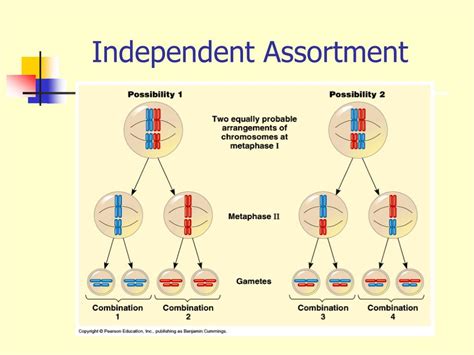
- Occurs during metaphase I of meiosis when homologous chromosomes line up at the cell's equator.
- Understanding independent assortment can help predict genetic outcomes and manage hereditary conditions.
Mechanisms and Stages
Independent assortment is a key mechanism during meiosis, specifically during metaphase I. During this phase, homologous chromosomes (pairs of chromosomes, each with different alleles for various traits) line up along the metaphase plate in a random orientation. This random arrangement is crucial because it allows for an unbiased distribution of genetic material to daughter cells. As a result, each gamete receives a unique combination of alleles. This randomness underpins the principle of independent assortment, allowing for diverse genetic combinations in offspring.Impact on Genetic Diversity
The concept of independent assortment significantly affects genetic diversity within a population. Unlike inheritance patterns that are influenced by single-gene traits, the independent assortment applies to multiple genes and their loci. By mixing and matching alleles during gamete formation, the genetic variation within a population increases. For example, if an organism has two genes each with two possible alleles (e.g., A/a and B/b), the potential combinations of these alleles in offspring are four (AB, Ab, aB, and ab) rather than just two, assuming no linkage between the genes. This diversity can enhance the adaptability and resilience of a population to environmental changes and stresses.What exceptions exist to independent assortment?
While independent assortment generally applies to genes that are located on different chromosomes or are far apart on the same chromosome, genes that are very close together may not assort independently. This is known as linkage, where alleles tend to be inherited together because they are on the same chromosome.
How does independent assortment influence breeding programs?
Breeding programs leverage independent assortment to create offspring with desired traits. By understanding how different genes assort independently, breeders can predict the likelihood of inheriting specific traits and make informed decisions about which organisms to cross to achieve the most favorable combinations.
To fully grasp independent assortment, it’s crucial to recognize its role beyond mere theory and see how it applies in practical scenarios. From medical genetics to agriculture, understanding independent assortment can lead to more effective management of hereditary conditions and enhanced crop yields, illustrating its broad and vital significance. This knowledge empowers professionals in various fields to better anticipate and manipulate the genetic outcomes in a controlled manner, highlighting the profound importance of this foundational genetic principle.