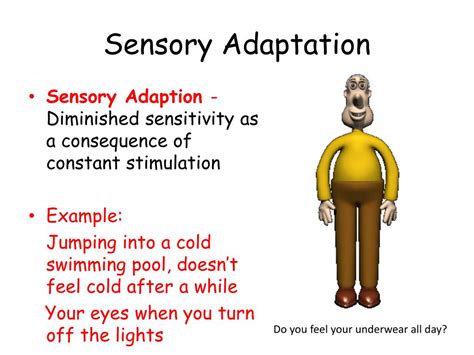
Ever found yourself in a new environment, like a bustling café, and noticed how the overwhelming noise fades into the background after a while? This phenomenon is known as sensory adaptation. While it's a natural and fascinating process, many people don't fully understand what sensory adaptation is and how it impacts our daily lives. This guide will walk you through the complexities of sensory adaptation, provide actionable steps, and offer practical examples to help you grasp this concept thoroughly. By understanding sensory adaptation, you can better navigate and manage various environments and stimuli you encounter on a daily basis.
The Essence of Sensory Adaptation
Sensory adaptation is the process by which our sensory receptors become less sensitive to constant or unchanging stimuli over time. Imagine standing in a smoky room. At first, the smoke is very noticeable, but after a while, it fades from your perception because your sensory receptors adapt to the presence of smoke.
This ability allows us to focus on new, changing, or important stimuli, like the sudden smell of smoke signaling a fire, while ignoring background noise and other constant factors. Sensory adaptation is vital for efficient functioning in our environment. However, it’s also essential to understand how it can affect our experiences and how to manage it effectively.
Quick Reference
Quick Reference
- Immediate action item: Identify constant stimuli in your environment and consciously note their presence for a few minutes.
- Essential tip: Engage in sensory exercises, like focusing on new sensory inputs when surrounded by constant stimuli, to enhance your adaptation process.
- Common mistake to avoid: Assuming that sensory adaptation means losing awareness entirely of constant stimuli, which can lead to missing important signals.
Understanding the Mechanisms Behind Sensory Adaptation
To fully appreciate sensory adaptation, we need to delve into the mechanisms that drive it. Sensory adaptation is primarily a function of sensory receptors located in various parts of our body, such as the eyes, ears, nose, skin, and other sensory organs.
The Physiology of Sensory Adaptation
Here’s how it works:
- When we are exposed to a new stimulus, our sensory receptors respond strongly to that stimulus.
- As the exposure continues, these receptors begin to reduce their response rate due to adaptation.
- This reduction in response helps us filter out constant stimuli, allowing us to focus on more important or changing information in our environment.
For example, when you first step into a cold room, you feel the chill intensely. After a few minutes, the cold no longer feels as overwhelming because your sensory receptors have adapted to the cold environment.
Types of Sensory Adaptation
There are several types of sensory adaptation, each associated with different sensory receptors:
- Smell and Taste Adaptation: When you eat a strong-flavored food, the taste and smell are very noticeable. After some time, your taste and smell receptors adapt, and you no longer notice the strong flavor.
- Touch Adaptation: When you put on tight jeans, the sensation of the fabric is initially bothersome. However, after some time, this feeling fades away.
- Hearing Adaptation: When you enter a loud restaurant, the noise level seems overwhelming at first. As you stay there for a while, you begin to ignore the background noise and focus on conversations.
- Sight Adaptation: When you move from a brightly lit room to a dark room, your eyes struggle to adjust initially. Gradually, your eyes adapt, and you can see more clearly in the darkness.
How to Enhance Your Sensory Adaptation
Understanding how to manage and enhance sensory adaptation can be incredibly useful, whether you are trying to work in a noisy environment or focusing on a task in a chaotic setting.
Here’s a detailed guide on how you can enhance your sensory adaptation process:
Step-by-Step Guide to Boost Sensory Adaptation
1. Awareness and Identification: Start by becoming more aware of the stimuli around you. Identify constant stimuli in your environment. For instance, note the consistent hum of an air conditioner, the steady smell of coffee in an office, or the background chatter in a café.
2. Sensory Exercises: Engage in sensory exercises to help your brain and sensory receptors become more adept at adapting to constant stimuli. For example:
- In a noisy room, focus on a new auditory input, like the sound of a specific song playing.
- In a room with a strong smell, deliberately focus on identifying the scent for a few minutes.
3. Mindfulness Techniques: Practice mindfulness to improve your overall sensory experience. Mindfulness helps you remain present and aware of new stimuli while allowing constant stimuli to fade into the background.
4. Short Breaks: Take short breaks to reset your sensory receptors. For example, if you’re working in a noisy office, step outside for a few minutes to let your auditory system adapt to a quieter environment.
5. Environmental Modifications: Make necessary adjustments to your environment to minimize constant stimuli. For instance, use noise-canceling headphones or earplugs to reduce background noise, or apply fragrance neutralizers to diminish persistent smells.
Practical Examples of Sensory Adaptation
Let’s explore some real-world examples of how to implement sensory adaptation techniques:
1. Working in a Noisy Office:
- Identify the constant noise in your office, such as the hum of the air conditioning unit.
- Practice focusing on new auditory inputs, like the rhythm of a specific piece of music during your break.
- Take short breaks to listen to something with minimal background noise, like a podcast or an audiobook.
- Use noise-canceling headphones during particularly noisy periods to reset your auditory adaptation.
2. Cooking in a Strong-Smelling Kitchen:
- Acknowledge the strong smell of cooking spices as you begin your meal preparation.
- Engage in a sensory exercise by focusing on identifying each spice’s unique aroma for a few minutes.
- Open windows or use a fan to enhance ventilation and help disperse the smell.
- Use a fragrance neutralizer or an air purifier to reduce the intensity of the smell.
FAQ: Addressing User Pain Points
How does sensory adaptation impact my ability to focus?
Sensory adaptation can significantly impact your ability to focus by helping you filter out constant, irrelevant stimuli. When you’re constantly bombarded by background noise, smells, or other constant stimuli, it becomes challenging to concentrate on your primary task. However, as your sensory receptors adapt to these constant stimuli, they become less noticeable, allowing you to focus better on new, changing, or important information. For instance, if you’re trying to concentrate on a meeting in a noisy room, initial discomfort fades as your sensory receptors adapt, enabling you to pay more attention to the discussion.
Can sensory adaptation be too much? How do I know if it’s affecting me?
While sensory adaptation is generally a beneficial process, it can sometimes lead to issues if it prevents you from noticing important stimuli. For example, if you work in a high-stress environment, sensory adaptation might cause you to miss critical warnings or signals. To determine if it’s affecting you, pay attention to whether constant stimuli are becoming so normalized that you fail to notice new or important changes. If you find yourself frequently missing important signals, it might be worth intentionally resetting your sensory adaptation through short breaks, mindfulness practices, or environmental adjustments.
Are there any strategies to reset my sensory adaptation?
Yes, there are several effective strategies to reset your sensory adaptation:
- Short breaks: Taking brief pauses to step away from constant stimuli can help reset your sensory receptors.