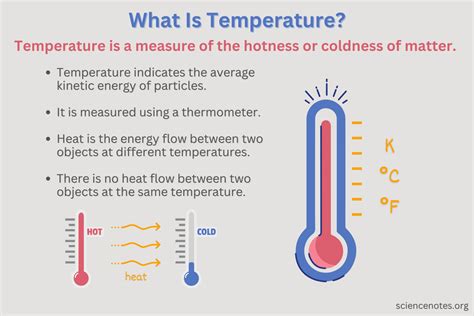
Understanding temperature is essential for numerous fields such as engineering, meteorology, healthcare, and everyday life. The concept of temperature serves as a bridge connecting the abstract world of physics with the tangible experiences we encounter daily. At its core, temperature measures the average kinetic energy of particles within a substance, providing a fundamental understanding of heat and energy transfer.
A simple yet profound grasp of temperature can lead to practical applications across different domains. In this article, we will decode what temperature measures simply, its key insights, and its broader implications.
Key Insights
- Temperature reflects the average kinetic energy of particles in a substance, influencing heat transfer and energy dynamics.
- The Celsius scale is often used in practical applications due to its intuitive zero-point and relevance to daily experiences.
- Understanding temperature can lead to improved operational efficiency in engineering and better health outcomes.
Understanding temperature requires dissecting its fundamental concept: the average kinetic energy of particles. This measurement is pivotal because it directly impacts heat transfer mechanisms, influencing everything from the boiling point of water to the thermal comfort in buildings.
To dive deeper into this concept, let’s analyze two significant aspects: how temperature is measured and the practical applications of this measurement.
How Temperature is Measured
Temperature measurement involves detecting the average kinetic energy of particles in a substance. Thermometric devices like thermometers, thermocouples, and infrared sensors play vital roles in this process. These tools convert thermal energy into a readable signal, offering insights into the thermal state of a system. The choice of thermometer often depends on the specific application, ranging from clinical thermometers in healthcare to infrared sensors in industrial environments.
A practical example is the use of infrared thermography in industrial inspections. This technique leverages the emission of thermal radiation from objects to create visual representations of their temperature distribution. Such non-contact methods are not only safer but also highly efficient in large-scale operations where direct contact thermometers might be impractical.
Practical Applications of Temperature Measurement
The applications of temperature measurement are vast and deeply entrenched in everyday life. One of the most straightforward examples is in healthcare. Accurate temperature measurement is crucial for diagnosing fevers, ensuring patient comfort, and monitoring the effectiveness of treatments. Clinical thermometers, often employing digital or mercury-in-glass technology, provide reliable data that medical professionals rely on to make critical decisions.
Another key application is in the food industry, where temperature control is vital to ensure food safety and quality. Refrigeration and freezing processes depend on precise temperature measurements to inhibit bacterial growth and maintain the shelf life of perishable goods. Mismanagement can lead to food spoilage and increased foodborne illnesses, underscoring the importance of accurate temperature monitoring.
Why is understanding temperature important in engineering?
Understanding temperature is crucial in engineering for designing and operating systems that efficiently manage heat. For instance, in HVAC systems, precise temperature control is vital for energy efficiency and thermal comfort in buildings. Engineers must account for temperature variations to ensure the optimal performance and longevity of machinery and equipment.
How does temperature measurement affect health?
Temperature measurement directly impacts health by enabling accurate diagnosis of fevers, monitoring the efficacy of medical treatments, and ensuring proper sterilization in healthcare settings. Accurate temperature readings help prevent the spread of infections and contribute to patient safety and well-being.
In conclusion, temperature measurement serves as a cornerstone for numerous practical applications, from engineering to healthcare. A simple grasp of this concept can lead to improved efficiency and better outcomes in various domains. By understanding the average kinetic energy of particles, professionals can make informed decisions that enhance operational effectiveness and contribute to safer, more reliable systems.