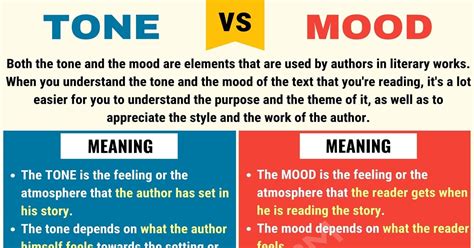
Tone and mood are two critical elements in crafting compelling narratives, yet they are often confused. Understanding the subtle differences between tone and mood can elevate your writing, ensuring it resonates with your intended audience in the most effective way. This article explores the practical nuances, backed by examples and expert insights, to help you master these concepts.
Key Insights
- Tone refers to the author's attitude towards the subject matter and audience.
- Mood involves the emotional environment created for the reader.
- Using tone and mood strategically enhances narrative engagement.
Defining Tone in Writing
Tone in writing represents the voice or attitude of the author, conveyed through stylistic choices. It’s a method the writer uses to shape the reader’s perception and emotional connection to the text. Consider J.K. Rowling’s “Harry Potter” series: the tone shifts from whimsical and light-hearted in early volumes to more serious and somber as the series progresses, keeping the reader’s expectations in line with the storyline.Authors establish tone through word choice, sentence structure, and even punctuation. For instance, a sarcastic tone can be achieved by using irony, while a friendly tone might employ casual language and inclusive phrases. Understanding and manipulating tone enables writers to communicate more precisely what they want the reader to feel.
Exploring Mood in Writing
Mood, on the other hand, refers to the emotional atmosphere that a piece of writing evokes in the reader. It’s not about what the author feels but rather what the author wants the reader to experience. For example, Stephen King’s horror novels create a mood of dread and suspense, drawing readers deeply into a world filled with fear and uncertainty.Mood is often established through descriptive language, setting, and character interactions. A writer might use dark, gloomy imagery to create a somber mood or bright, vivid descriptions to evoke a joyful atmosphere. The mood works in tandem with tone to enhance the overall impact of the narrative.
Strategic Application of Tone and Mood
Effective use of tone and mood can make or break a piece of writing. By deliberately selecting a tone that aligns with the narrative’s objective, an author can guide the reader’s emotional and intellectual responses. For instance, a detective novel written in a detached, analytical tone may engage readers in the methodical unraveling of a mystery, whereas a romantic story written in an affectionate tone immerses the reader in the characters’ emotional journeys.Additionally, a well-crafted mood can heighten tension, evoke empathy, or create a sense of wonder. When tone and mood are in harmony, they complement each other to create a richer, more immersive reading experience. Writers must remain conscious of these elements to ensure their narrative’s emotional and intellectual impact is optimized.
Can tone and mood be different in the same piece?
Absolutely. While tone is established by the author’s voice, mood shifts throughout a narrative based on the reader’s experience. For example, a mystery novel might maintain a serious tone while shifting mood from suspense to relief as the plot unravels.
How do you maintain a consistent tone?
Consistency in tone is crucial for a cohesive narrative. Authors can maintain it by adhering to specific voice and style choices throughout the work, ensuring all stylistic elements like word choice, sentence length, and descriptive language align with the chosen tone.
In conclusion, understanding and employing tone and mood effectively can significantly enhance your writing’s depth and impact. By carefully selecting your author’s attitude and the emotional environment you create, you can engage readers in a way that feels both authentic and compelling.