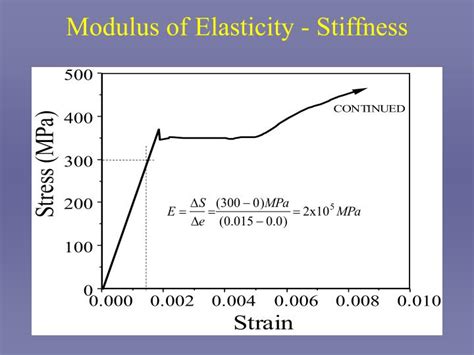
The modulus of elasticity, often referred to as Young’s modulus, is a fundamental property in the field of materials science and engineering. It provides a measure of a material’s stiffness or resistance to elastic deformation under load. Steel, renowned for its robustness and versatility, has a modulus of elasticity that engineers must meticulously understand for various applications. This article delves into the technical insights, practical applications, and critical considerations related to the modulus of elasticity of steel, providing a comprehensive guide for professionals in the industry.
In the realm of engineering, the modulus of elasticity of steel is crucial for structural analysis and design. The precise understanding of this property is paramount to ensuring the integrity and durability of steel structures. Whether it is a towering skyscraper or an intricate bridge, the modulus of elasticity informs critical design decisions and informs safety protocols. In this discussion, we explore the significance of the modulus of elasticity in steel and its implications for modern engineering projects.
Key Insights
- Steel's modulus of elasticity is a primary determinant of its load-bearing capacity and structural integrity.
- Understanding the technical aspects of Young's modulus aids in optimizing steel usage in construction projects.
- Implementing the correct modulus values in engineering software ensures accurate stress analysis and structural stability.
Understanding Young's Modulus in Steel
Young’s modulus for steel, typically ranging from 200 to 210 GPa, is a pivotal measure reflecting its stiffness. This value indicates the material’s linear relationship between stress and strain, under the condition that the material deforms elastically. In practical terms, a higher modulus implies greater stiffness, meaning the steel can withstand higher loads without significant deformation. For engineers, this property helps predict how steel will respond to various loading conditions, making it essential in the design phase.
Analyzing Young’s modulus involves comprehending the material’s stress-strain behavior. When stress is applied within the elastic limit, the strain (deformation) produced is proportional to the stress, described by Hooke’s Law. This linear region forms the foundation for most structural analyses, where steel’s ability to return to its original shape after the load is removed is vital. Therefore, understanding the modulus of elasticity ensures that structural components are designed to maintain their integrity under operational stresses.
Applications of Young's Modulus in Engineering Design
The practical application of Young’s modulus in steel extends across diverse engineering domains. In the construction of skyscrapers, the modulus directly impacts load distribution and material selection. Engineers rely on this property to calculate the necessary cross-sectional areas of steel beams and columns to ensure that they can carry the expected loads without excessive deflection.
For bridges, the modulus of elasticity plays a crucial role in designing the load paths and determining the required dimensions of steel elements. For instance, the long-span steel trusses in a suspension bridge must exhibit high stiffness to maintain the structural stability under dynamic loading conditions, such as wind and vehicular traffic.
In automotive and aerospace industries, the modulus of elasticity of steel influences the design of high-strength components. Engineers select materials with specific modulus values to achieve a balance between strength, weight, and cost, which are critical considerations in these high-performance applications.
Real-World Example:
A notable example is the Burj Khalifa, the world’s tallest tower, which extensively uses high-strength steel. The design meticulously considers the modulus of elasticity to ensure that the steel sections can sustain the immense gravitational loads and dynamic forces, such as wind loads, without compromising safety and stability.
How does temperature affect the modulus of elasticity of steel?
Temperature variations can impact the modulus of elasticity of steel. Generally, as temperature increases, the modulus decreases. This reduction in stiffness must be factored into the design for high-temperature applications to ensure structural integrity.
Can the modulus of elasticity vary across different types of steel?
Yes, the modulus of elasticity can vary depending on the steel composition and heat treatment processes. For instance, high-strength low-alloy (HSLA) steels have different modulus values compared to standard carbon steels. Engineers must select the appropriate steel type based on the specific requirements of the application.
By comprehending the modulus of elasticity of steel and its implications, engineers can design safer, more efficient, and resilient structures. Accurate material properties inform precise calculations and ultimately lead to optimized engineering solutions that withstand operational loads and environmental conditions.