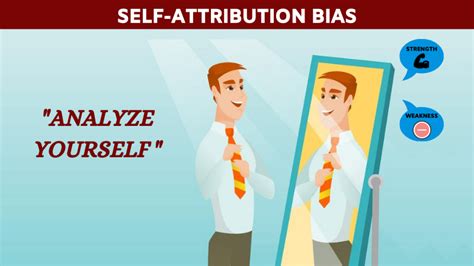
Self attribution bias can significantly impact your everyday decisions, often influencing areas like productivity, teamwork, and personal relationships. This guide aims to demystify self attribution bias, providing actionable advice to help you recognize and counteract it. Understanding this cognitive bias is crucial for fostering personal growth and improving professional environments.
Understanding Self Attribution Bias
Self attribution bias occurs when individuals attribute their successes to internal characteristics—like talent, hard work, or skill—and their failures to external factors, such as luck or circumstances beyond their control. This bias not only distorts a clear view of reality but can also lead to complacency, overconfidence, or unnecessary self-criticism.
Recognizing self attribution bias is the first step toward mitigating its effects. By becoming aware of this bias, you can take deliberate actions to challenge it, leading to more balanced self-assessments and fostering a more realistic, growth-oriented mindset.
Quick Reference
Quick Reference
- Immediate action item: Keep a self-reflection journal to note down successes and failures without initial attribution.
- Essential tip: When reflecting on a success, ask yourself: “What external factors contributed to this outcome?”
- Common mistake to avoid: Overlooking the impact of teamwork or luck on your successes; recognizing it can help you appreciate collective efforts.
Step-by-Step Guide to Recognizing Self Attribution Bias
Let’s delve into a detailed, step-by-step approach to identifying and managing self attribution bias:
Step 1: Self-Reflection Journal
Begin by maintaining a self-reflection journal. Choose a notebook where you’ll record significant events in your life—both successes and failures—without immediately attributing them to internal or external factors.
Here’s how to start:
- Date: Write down the date of the event.
- Event description: Provide a brief description of what happened.
- Immediate feelings: Note how you felt immediately after the event.
- Attribution: Without making an early judgment, write down any initial thoughts on why the event occurred.
Step 2: Reflect and Analyze
Once you’ve logged several entries, take time to review them. Look for patterns in how you attribute successes and failures:
- Successes: Do you often attribute them to your abilities or hard work?
- Failures: Do you more frequently blame external factors like timing or luck?
Analyzing these patterns helps identify where self-attribution bias may be influencing your perceptions.
Step 3: Challenge Your Biases
Start to challenge your automatic attributions by asking deeper questions:
- For successes, ask: “What were the contributing factors outside of my control or effort?”
- For failures, ask: “How much did my actions and decisions influence this outcome?”
This practice encourages a more balanced view by recognizing the interplay of various factors.
Step 4: Practice Empathy and Gratitude
Cultivate empathy and gratitude by acknowledging the contributions of others in your successes and the luck or external events that sometimes play a role:
When you achieve something:
- Acknowledge any help you received from others.
- Consider the external conditions that contributed.
Step 5: Continuous Learning
Make this a continuous learning process. Regularly update your journal and reflect on new experiences to gradually recalibrate your self-perception.
How to Implement Self Attribution Bias Awareness in Team Settings
Self attribution bias isn’t just a personal issue; it’s also prevalent in group settings. Here’s how to bring this awareness into your team dynamics:
Acknowledging Team Contributions
In team settings, it’s easy to attribute group successes to individual brilliance. Here’s how to shift the perspective:
- Hold recognition meetings: Regularly celebrate team achievements and acknowledge contributions from all members.
- Encourage feedback: Create an environment where team members feel comfortable giving and receiving constructive feedback.
- Share external factors: When discussing successes, highlight external factors like market conditions or client support that influenced outcomes.
Avoiding Blame Culture
Failures in team projects often lead to finger-pointing. To prevent this:
- Focus on process: Analyze what process flaws, if any, contributed to a failure rather than assigning blame.
- Externalize uncontrollable factors: Discuss how external factors like unexpected client changes or supply chain issues can impact outcomes.
- Learn and adapt: Turn failures into learning opportunities by holding debrief sessions to identify what can be improved.
Practical FAQ
How do I know if I’m experiencing self attribution bias?
Identifying self attribution bias is often about noticing patterns in your thought processes. Ask yourself the following questions:
- Do I often take full credit for successes but downplay my role in failures?
- Do I quickly attribute failures to external factors like bad luck or poor circumstances?
- Do I rarely acknowledge the contributions of others, even in collaborative efforts?
If you answer yes to these, you might be experiencing self attribution bias.
Can self attribution bias affect my professional growth?
Absolutely. Self attribution bias can hinder professional growth in several ways:
- Overconfidence: Failing to recognize external factors contributing to successes may lead to overconfidence and taking unnecessary risks.
- Underestimation of effort: Not acknowledging hard work or external help in your successes can lead to feelings of undervaluation.
- Underestimating failures: Attributing failures solely to external factors can prevent learning from mistakes and improving processes.
By recognizing and challenging this bias, you can foster a more balanced, growth-oriented mindset.
What are some strategies to overcome self attribution bias?
Overcoming self attribution bias involves a combination of self-awareness, empathy, and reflective practices:
- Self-reflection: Regularly review your attributions of successes and failures.
- Gratitude practice: Take time to thank others for their contributions.
- Feedback: Seek and give constructive feedback regularly.
- Scenario analysis: Analyze past successes and failures to identify external and internal factors.
- Mindfulness: Stay present and avoid projecting past biases onto current or future situations.
Implementing these strategies can help mitigate the effects of self attribution bias.
By understanding and actively working to counteract self attribution bias, you not only improve your personal growth but also contribute to healthier, more collaborative team dynamics.