If you’ve ever stared at a starfish or a seashell, you’ve likely noticed a certain elegance in their structure. What you’re seeing is an example of radial symmetry. But what does this mean, and why does it matter? This guide dives into the fascinating world of radial symmetry, offering step-by-step explanations, practical examples, and tips to help you understand and apply this concept easily.
Understanding Radial Symmetry
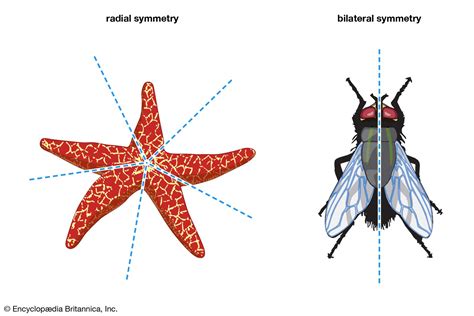
Radial symmetry is a type of symmetry where an organism’s body can be divided into identical halves through any plane passing through its central axis. This contrasts with bilateral symmetry, where there is only one plane that divides the organism into mirror-image halves. Organisms with radial symmetry are often found in marine environments, and many are invertebrates such as starfish, sea urchins, and some types of sponges.
This guide aims to demystify radial symmetry, breaking down complex concepts into easy-to-understand pieces. From identifying key characteristics to understanding the evolutionary advantages, we’ll cover everything you need to grasp this biological phenomenon.
Why Radial Symmetry Matters
Radial symmetry is not just a quirky biological feature; it plays crucial roles in the lives of the organisms that exhibit it. Here’s why it’s important:
- Efficient feeding: Organisms with radial symmetry can capture food from all directions, which is particularly advantageous for filter feeders like sea anemones.
- Simplified movement: In some cases, radial symmetry allows for simpler, more direct movement patterns, ideal for organisms that don’t rely on complex locomotion.
- Balanced environmental interaction: It enables organisms to interact with their environment uniformly, facilitating sensory input and predation strategies.
Quick Reference
Quick Reference
- Immediate action item: Observe a marine organism like a starfish and identify the points where it could be divided symmetrically.
- Essential tip: To better understand radial symmetry, practice drawing lines through the organism’s center at different angles to see how it divides symmetrically.
- Common mistake to avoid: Confusing radial symmetry with bilateral symmetry; ensure there’s only one central axis for true radial symmetry.
Identifying Radial Symmetry
Identifying radial symmetry in marine organisms is straightforward with a few simple steps:
Step-by-Step Guide
Here’s a detailed look at how to identify radial symmetry in marine life:
Observation
Start by observing a marine organism up close. Marine biology enthusiasts often find starfish, sea urchins, and sea anemones perfect for studying radial symmetry.
- Find a specimen: Whether at a beach, an aquarium, or a digital specimen, locate an organism that exhibits radial symmetry. A starfish is a classic example.
- Close examination: Look closely at the organism’s body structure. Identify the central axis, which runs from the center of the organism’s body out to the edges.
Visual Division
Now that you’ve located your specimen, it’s time to visualize dividing it into symmetrical parts:
- Drawing lines: Draw a line from the center of the organism to each of its arms or segments. Try dividing it through different angles, such as 180 degrees and 90 degrees.
- Checking symmetry: Each division should create mirror-image halves. If the organism has radial symmetry, these halves will be identical.
Practical Examples
Let’s apply what we’ve learned with some practical examples:
Example 1: Consider a sea star (starfish). This echinoderm has five or more arms radiating from a central disk. If you were to cut it through any axis passing through the center, the resulting halves would mirror each other.
Example 2: Look at a sea urchin. Though it appears irregular at first glance, the spines and tube feet arrange in a radially symmetrical pattern. A vertical or horizontal cut through its center should yield symmetrical halves.
Benefits and Applications
Understanding radial symmetry isn’t just an academic exercise; it has practical applications in various fields:
Evolutionary Biology
Radial symmetry offers insights into evolutionary biology. It suggests that these organisms have evolved adaptations to maximize their interaction with their environment.
Marine Ecology
In ecology, studying radial symmetry can help in understanding the behaviors and habitats of marine organisms, which is crucial for conservation efforts.
Medical Fields
Medical research sometimes explores radial symmetry to understand developmental biology and can even inform tissue engineering.
Practical FAQ
What are some common misconceptions about radial symmetry?
One common misconception is that radial symmetry is less complex than bilateral symmetry. However, radial symmetry can be just as intricate and involves sophisticated evolutionary adaptations. Another misconception is thinking that radial symmetry organisms are weaker; in reality, many radially symmetrical organisms, like starfish, demonstrate remarkable resilience and regenerative abilities.
How does radial symmetry affect the behavior of marine animals?
Radial symmetry allows marine animals to interact uniformly with their environment, making them highly efficient in activities like feeding and predator evasion. For instance, a sea anemone can capture food particles coming from all directions, thanks to its radial symmetry. Moreover, this symmetry often correlates with simpler, direct movement patterns, as complex locomotion is less necessary.
Why is radial symmetry often found in sessile or slow-moving organisms?
Radial symmetry is often seen in sessile (fixed-position) or slow-moving organisms because it provides a straightforward way to interact with the environment from a single axis. For these organisms, which may not rely on complex movement, radial symmetry allows them to efficiently gather food and sensory information without the need for intricate locomotion systems.
By understanding radial symmetry, we can appreciate the fascinating ways in which nature has adapted to optimize survival and interaction in different environments. From simple observational exercises to complex ecological and evolutionary insights, radial symmetry opens a window into the diverse and intricate design principles of biology.