Understanding Perpendicular Lines and Their Intersections
Are you struggling with the concept of perpendicular lines and their intersections in geometry? You’re not alone. Understanding how to identify, draw, and work with perpendicular lines can be challenging, but it’s essential for mastering more complex geometric problems. This guide will provide you with practical, step-by-step guidance to help you master perpendicular lines and their intersections with actionable advice, real-world examples, and tips to avoid common mistakes.
We’ll start by addressing the most pressing pain points and then delve into detailed sections to help you grasp both the basics and advanced concepts of working with perpendicular lines.
Quick Reference Guide
Quick Reference
- Immediate action item: Identify two lines that intersect at a right angle (90 degrees). The slopes of these lines are negative reciprocals.
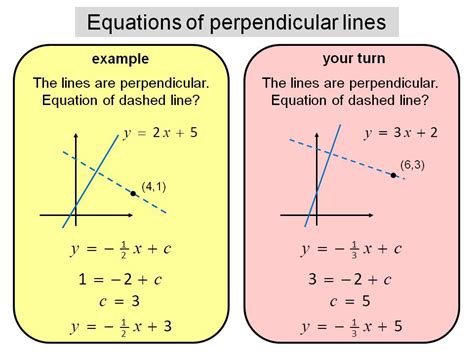
- Essential tip: To find the equation of a line perpendicular to another, flip the slope of the original line and change its sign. For example, if the slope of a line is 2, the slope of the perpendicular line will be -1/2.
- Common mistake to avoid: Confusing perpendicular lines with parallel lines. Perpendicular lines intersect at right angles, whereas parallel lines never intersect.
Detailed How-To Sections
Identifying Perpendicular Lines
Understanding perpendicular lines starts with recognizing them. Perpendicular lines meet at a precise 90-degree angle. If you’re working with two given lines in a coordinate plane, here’s how to determine if they are perpendicular:
Step-by-Step Guidance:
- Determine the slope of each line: Use the formula for the slope, which is m = (y₂ - y₁) / (x₂ - x₁). For example, if you have two points (x₁, y₁) and (x₂, y₂) on a line, compute the slope using these points.
- Check the slopes for perpendicularity: If the slopes of two lines are negative reciprocals of each other, they are perpendicular. For instance, if one line has a slope of 3, the perpendicular line will have a slope of -1⁄3.
Example: Suppose you have two lines: Line A passing through points (1, 2) and (3, 4) and Line B passing through (2, 1) and (4, -1).
- Calculate slope of Line A:
- m_A = (4 - 2) / (3 - 1) = 1
- Calculate slope of Line B:
- m_B = (-1 - 1) / (4 - 2) = -1
- Check perpendicularity: Since the slope of Line A is 1 and the slope of Line B is -1, and they are negative reciprocals of each other, the lines are perpendicular.
Equation of a Perpendicular Line
Knowing how to find the equation of a line that is perpendicular to another is crucial in many geometric problems. Follow these steps to find the equation of a line perpendicular to a given line:
- Determine the slope of the given line: Find the slope using the coordinates of any two points on the line. For example, if a line passes through (3, 5) and (7, 9), the slope is:
- m = (9 - 5) / (7 - 3) = 1
- Find the negative reciprocal of the slope: If the slope of the original line is m, the slope of the perpendicular line will be -1/m. In the above example, the perpendicular line’s slope will be -1.
- Use the point-slope form to write the equation: The point-slope form is given by y - y₁ = m(x - x₁). Using a point on the perpendicular line and its slope:
- If we use point (3, 5) and slope -1, the equation becomes:
- y - 5 = -1(x - 3)
- Simplifying, we get y = -x + 8
This method will give you the equation of a line that is perpendicular to any given line that passes through a known point.
Practical Examples and Applications
To solidify your understanding, let’s delve into a few practical examples where you might apply your knowledge of perpendicular lines:
Example 1:
Suppose you’re designing a rectangular garden, and you need to ensure that one side is perpendicular to another to create a perfect square. If one side is defined by the line y = 2x + 3, what should be the equation of the line that is perpendicular to it and passes through the point (4, 5)?
- Identify the slope of the given line: The slope is 2.
- Find the slope of the perpendicular line: The perpendicular slope is -1⁄2.
- Write the equation using point-slope form: With point (4, 5) and slope -1⁄2:
- y - 5 = -1⁄2(x - 4)
- Simplify to get the equation: y = -1⁄2 x + 7
If you need to build a ramp that meets a vertical wall at a right angle, and the wall is represented by the line y = -3, what should be the equation of the perpendicular ramp that passes through (2, 1)?
- Identify the slope of the vertical line: Since it’s vertical, its slope is undefined.
- Determine the slope of the perpendicular line: The perpendicular line must be horizontal, meaning its slope is 0.
- Write the equation using point-slope form: Since it’s horizontal, the equation is y = 1 (as it passes through (2, 1)).
Practical FAQ
How do I find the intersection point of two perpendicular lines?
To find the intersection point of two perpendicular lines, you need to solve their equations simultaneously. Here’s a clear, actionable approach:
- Write the equations of both lines: Let’s say Line 1 is y = 2x + 3, and Line 2 is y = -1⁄2 x + 6.
- Set the equations equal to each other: To find the x-coordinate of the intersection point, set y from both lines equal to each other:
- 2x + 3 = -1⁄2 x + 6
- Solve for x: Combine like terms to isolate x:
- 2x + 1⁄2 x = 6 - 3
- 5⁄2 x = 3
- x = 6⁄5 or 1.2
- Find the corresponding y-coordinate: Substitute x back into either line’s equation to find y. Using Line 1:
- y = 2(1.2) + 3 = 5.4
- Intersection point: The intersection point is (