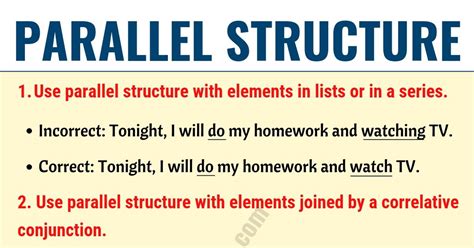
Parallel structure in writing is a compositional technique that emphasizes consistency in grammatical form for elements in a sentence or series of sentences that present similar concepts or ideas. This concept plays a critical role in maintaining clarity, rhythm, and emphasis in prose, ensuring that your message is coherent and impactful.
Understanding Parallel Structure
Parallel structure, also known as parallelism, is a grammatical approach where items in a list or similar components in a sentence share the same grammatical form. The importance of this method cannot be overstated in writing; it creates symmetry and a balanced flow in sentences, making them more readable and aesthetically pleasing.For instance, consider the following sentence: “She enjoys swimming, running, and to hike.” This sentence does not adhere to parallel structure because "enjoys swimming," "running," and "to hike" vary in grammatical form. To correct it, the sentence should read: “She enjoys swimming, running, and hiking.” Here, each element in the list is in the same form, thereby establishing parallelism.
The Benefits of Using Parallel Structure
Implementing parallel structure offers several benefits that enhance the quality of your writing. Firstly, it ensures consistency, which makes the text easier to understand. Secondly, it creates a rhythmic flow, which makes the reading experience more engaging. Thirdly, parallelism can enhance emphasis, ensuring key points stand out.For example, in legal writing, parallel structure is vital for clarity and precision: “The law requires the defendant to be fined, imprisoned, or both.” The uniformity here underscores the gravity of the multiple penalties that can be imposed, thereby emphasizing the comprehensive nature of the legal consequences.
Key Insights
Key Insights
- Primary insight with practical relevance: Using parallel structure improves the readability and coherence of your text.
- Technical consideration with clear application: Ensure that all parts of a list or comparable elements in a sentence are grammatically identical to maintain parallel form.
- Actionable recommendation: Regularly proofread your writing for parallelism to enhance overall clarity and professionalism.
Common Misconceptions
Despite its importance, parallel structure is often misunderstood. Many writers overlook its application in complex lists or compound sentences. Additionally, some believe that any list is automatically parallel, which is not the case unless all items are grammatically consistent.FAQ Section
What is an example of a sentence without parallel structure?
An example of a sentence without parallel structure is: “John decided to run the marathon, eating ice cream, and relax at the spa.” Here, “run the marathon” is followed by “eating” and “relax,” which do not share the same grammatical form.
How do I correct a sentence that lacks parallel structure?
To correct a sentence lacking parallel structure, ensure all elements in a list or comparative components within a sentence share the same grammatical form. For example, the corrected sentence would be: “John decided to run the marathon, eat ice cream, and relax at the spa.” Here, all actions are in the same form.
Maintaining parallel structure is a fundamental aspect of writing that, when practiced diligently, can elevate the quality of your prose. It ensures that each part of your sentence mirrors the others in form, thereby enhancing clarity, rhythm, and emphasis.