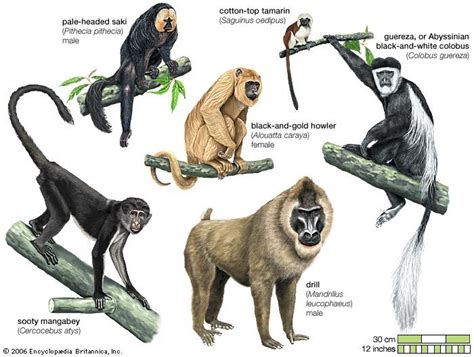
The world of primatology is replete with intriguing species that have captured the fascination of scientists and enthusiasts alike. Among these, Old World Monkeys hold a unique position due to their complex social structures, evolutionary significance, and fascinating behaviors. Originating from Africa and Asia, these primates are a subject of extensive research, shedding light on the evolutionary pathways and ecological niches that have shaped their ancient lineage.
Key Insights
- Old World Monkeys demonstrate advanced social behaviors and intricate mating strategies.
- These primates play a critical role in their ecosystems as both seed dispersers and prey for various predators.
- Conservation efforts should focus on preserving their complex habitats to ensure their survival.
Old World Monkeys, belonging to the family Cercopithecidae, are distinguished by their narrow noses with nostrils that face sideways, in contrast to the broad-faced New World Monkeys. This familial distinction not only highlights their anatomical differences but also provides clues about their divergent evolutionary paths. Studies suggest that the divergence between Old and New World Monkeys occurred around 40 million years ago, driven by factors such as geographical isolation and differing ecological niches.
Social Structures and Communication
Old World Monkeys are known for their sophisticated social systems. Many species, such as baboons and macaques, live in multi-male, multi-female groups with a dominance hierarchy that influences resource access and mating opportunities. These hierarchies are maintained through intricate social interactions, including grooming, displays, and vocalizations. For example, the Chacma Baboon’s use of complex vocal signals to communicate about predators and resource locations has been well-documented, demonstrating their cognitive abilities and social complexity.Another remarkable aspect of their social behavior is the role of grooming in maintaining group cohesion. Grooming not only helps in removing ectoparasites but also serves as a social bonding mechanism. This mutualistic relationship helps in reducing stress and reinforcing social bonds, essential for the stability of the group dynamics.
Ecological Role and Conservation Concerns
Old World Monkeys occupy various ecological niches, from tropical forests to grasslands, and play crucial roles in their respective ecosystems. As seed dispersers, they contribute to plant regeneration and biodiversity. For instance, the Green Monkey disperses seeds through its feces, aiding in the spread of various plant species. However, their role as prey for a variety of predators, including birds of prey, snakes, and humans, highlights their position in the food web.Conservation of Old World Monkeys faces multiple challenges, primarily due to habitat destruction, climate change, and human encroachment. Deforestation, especially in tropical regions, has led to significant habitat loss, threatening the survival of species like the threatened Sykes’ Monkey. Climate change further exacerbates these challenges by altering food availability and breeding patterns.
Effective conservation strategies should include habitat preservation and restoration, as well as community-based conservation initiatives that engage local populations in sustainable practices. Education and awareness campaigns are crucial in reducing human-wildlife conflicts and promoting coexistence.
What are the main threats to Old World Monkeys?
The primary threats include habitat destruction due to deforestation, climate change, and human encroachment. Poaching and hunting for bushmeat also pose significant risks.
How do Old World Monkeys contribute to their ecosystems?
Old World Monkeys play vital roles in their ecosystems as seed dispersers and as prey for various predators, thereby influencing plant regeneration and maintaining ecological balance.
Old World Monkeys remain a captivating subject in the field of primatology due to their evolutionary significance and complex behaviors. Understanding their social structures, ecological roles, and the threats they face is essential for devising effective conservation strategies. By preserving their habitats and addressing the anthropogenic factors that threaten their existence, we can ensure the survival of these fascinating primates for generations to come.