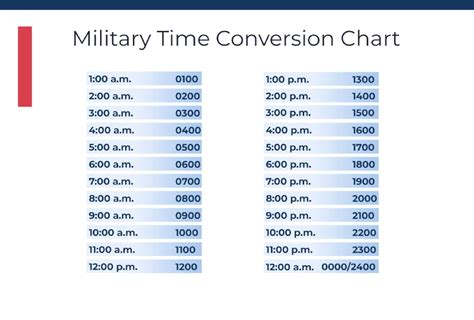
Welcome to your comprehensive guide on mastering military time reading! Military time is an essential skill, especially for professionals in the military, aviation, healthcare, and other sectors where precise timekeeping is vital. This guide will take you through everything you need to know to understand and read military time effectively, ensuring you can handle any time-related challenge with confidence. Let's dive right in!
The need for clear and unambiguous time communication is paramount in high-stakes environments. Military time, also known as the 24-hour clock, eliminates the confusion that can come with AM and PM distinctions, providing a universal time standard. Whether you’re scheduling meetings, coordinating shifts, or just need to understand a time without the room for error, mastering military time is a valuable skill.
To help you get started quickly, here’s a Quick Reference with essential points to remember:
Quick Reference
- Immediate action item: Convert your first three familiar times (like 7:30 AM) to military time to get started.
- Essential tip: Remember that military time does not use AM or PM labels, starting at 00:00 (midnight) and counting up to 23:59.
- Common mistake to avoid: Confusing 13:00 with 1:00 PM, as military time uses a continuous count from midnight.
Understanding the Basics of Military Time
Military time is structured around a 24-hour day. Here’s how to break it down:
Each hour is designated a number from 00 to 23. Midnight is 00:00, and noon is 12:00. Here’s a simple breakdown:
- 00:00 to 05:59: Early morning (e.g., 01:00 is 1:00 AM in civilian time)
- 06:00 to 11:59: Morning (e.g., 08:30 is 8:30 AM)
- 12:00 to 17:59: Afternoon (e.g., 13:00 is 1:00 PM)
- 18:00 to 23:59: Evening/Night (e.g., 20:45 is 8:45 PM)
This structure is not only clear but also avoids any ambiguity, making military time perfect for critical operations where precision is key.
To make this more practical, let’s work through some conversions:
- 08:15 AM is 08:15 in military time.
- 3:45 PM converts to 15:45.
- Midnight is always 00:00.
Step-by-Step Guide to Converting Civilian Time to Military Time
Converting from civilian time to military time is straightforward but requires attention to detail. Here’s how to do it step-by-step:
For morning times (up to 11:59 AM):
1. Identify the hours and minutes.
2. Write the hours and minutes directly as military time.
Example:
- 7:30 AM is written as 07:30 in military time.
For afternoon times (12:00 PM to 11:59 PM):
1. Identify the hours and minutes.
2. Add 12 to the hours (except for 12:00 PM, which remains 12:00).
Example:
- 2:45 PM is written as 14:45 (since 2 + 12 = 14).
- 10:15 PM is written as 22:15 (since 10 + 12 = 22).
Remember, 12:00 PM in civilian time is always 12:00 in military time.
To solidify your understanding, try converting these examples on your own:
- 9:00 AM
- 1:30 PM
- 6:45 PM
- Midnight
Answers:
- 9:00 AM becomes 09:00.
- 1:30 PM becomes 13:30.
- 6:45 PM becomes 18:45.
- Midnight is always 00:00.
Advanced Tips for Perfecting Military Time Reading
Once you’ve mastered the basics, here are some advanced tips to refine your military time reading skills:
1. Practice with real-life examples: Use timetables, schedules, or even mock operations where you must switch between civilian and military time.
2. Use technology: Apps and online tools are available to help you practice converting times and even quiz you on your skills.
3. Memorize common military time phrases: Phrases like “zero six hundred” for 06:00, “thirteen hundred” for 13:00, etc., are common in military and emergency communication.
4. Pay attention to fractions of an hour: In military time, fractions of an hour are written in minutes (e.g., 15 minutes is 15:00, 30 minutes is 30:00).
Common Challenges and How to Overcome Them
Every skill comes with its set of challenges, and military time reading is no exception. Here’s how to tackle some common issues:
1. Confusion with “13” and “21”: Remember, 13:00 is 1:00 PM, and 21:00 is 9:00 PM. A common mistake is thinking “13:00” is 13:00 hours, which doesn’t make sense.
2. Misreading “00” and “24”: Midnight is “00:00” in military time, not “24:00.” Confusing these can lead to significant errors, especially in scheduling.
3. Remembering that “12:00” is the same whether it’s AM or PM in military time.
To address these challenges, it’s helpful to practice conversion exercises frequently, especially focusing on tricky times like 13:00 and 21:00.
Practical FAQ
Can military time be used in everyday life?
Absolutely! While military time might seem reserved for military or emergency services, it’s highly useful in everyday contexts. For example:
- Flight schedules: Airlines use military time to coordinate flights around the world, ensuring clear communication.
- Healthcare: Hospitals often use military time for shift schedules, medications, and patient care times to avoid confusion.
- Sports broadcasting: Sports events often display times in military format to ensure there’s no mix-up.
Even at home, using military time can help reduce confusion, especially when planning events or coordinating with people across different time zones.