Mastering Math: Deciphering Even and Odd Functions Simply
Welcome to your comprehensive guide on mastering the nuances of even and odd functions in mathematics! This guide is designed to walk you through each step of understanding these fundamental concepts in a way that is accessible, practical, and directly applicable to your math needs. Whether you’re a student looking to ace your exams, a professional aiming to refine your mathematical skills, or simply someone curious about the beauty of math, this guide will provide actionable advice and real-world examples to help you get it right.
Understanding the Problem: What Are Even and Odd Functions?
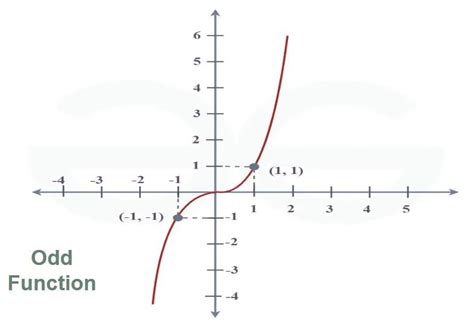
Even and odd functions form the foundation of understanding symmetry in mathematical functions. They describe how a function behaves under reflection. An even function is one that satisfies the condition f(x) = f(-x). This means that the function’s graph is symmetrical around the y-axis. A odd function, on the other hand, satisfies the condition f(-x) = -f(x), indicating that its graph is symmetrical around the origin. Mastering these concepts will help you in various fields, from engineering to economics, where symmetry plays a crucial role.
The challenge often lies in identifying these functions from equations and understanding their properties deeply enough to apply them correctly in different contexts.
Quick Reference
Quick Reference
- Immediate action item with clear benefit: Identify if f(x) = f(-x) for even functions or f(-x) = -f(x) for odd functions.
- Essential tip with step-by-step guidance: To verify, plug in a few values for x and see if the conditions hold.
- Common mistake to avoid with solution: Confusing the conditions; remember, for even functions, values are the same on both sides of the y-axis, while for odd functions, they mirror across the origin.
How to Identify Even Functions: Step-by-Step Guide
Identifying an even function can be straightforward once you understand the basic principle.
Step 1: Check the Function Definition
Look at the equation of the function. Common examples of even functions are polynomials like f(x) = x², f(x) = cos(x), and f(x) = |x|. These functions inherently satisfy the even function condition.
Step 2: Test Symmetry
To verify if a function is even, apply the condition f(x) = f(-x). For example, take f(x) = x²:
f(x) = x²
f(-x) = (-x)² = x²
Since f(x) = f(-x), this function is even.
Step 3: Practical Example
Consider f(x) = 4x⁴ + 3x² + 5:
f(-x) = 4(-x)⁴ + 3(-x)² + 5 = 4x⁴ + 3x² + 5
Since f(x) = f(-x), this function is also even.
Step 4: Graphing Even Functions
Plot the function to visually confirm its symmetry about the y-axis.
How to Identify Odd Functions: Step-by-Step Guide
Identifying odd functions follows a similar structured approach but focuses on a different condition.
Step 1: Check the Function Definition
Look at the equation of the function. Common examples of odd functions are f(x) = x³, f(x) = sin(x), and f(x) = x. These naturally fulfill the odd function condition.
Step 2: Test Symmetry
To verify if a function is odd, apply the condition f(-x) = -f(x). For example, take f(x) = x³:
f(x) = x³
f(-x) = (-x)³ = -x³
Since f(-x) = -f(x), this function is odd.
Step 3: Practical Example
Consider f(x) = 5x³ - 7x:
f(-x) = 5(-x)³ - 7(-x) = -5x³ + 7x
Since f(-x) = -f(x), this function is odd.
Step 4: Graphing Odd Functions
Plot the function to visually confirm its symmetry around the origin.
Practical FAQ
Can polynomial functions be both even and odd?
No, a polynomial function cannot be both even and odd unless it is a constant function. This is because for it to be even, all exponents must be even, and for it to be odd, all exponents must be odd. Therefore, it can either satisfy one condition or the other, but not both unless the function reduces to zero or a constant value.
What happens if a function is neither even nor odd?
If a function does not satisfy the conditions of being even or odd, it is simply called neither even nor odd. These functions lack symmetry around the y-axis or the origin. For example, a function like f(x) = x² + x is neither even nor odd as it fails both f(x) = f(-x) and f(-x) = -f(x) tests.
Advanced Tips: Taking Your Understanding Further
Once you’ve mastered the basics, you can take your understanding to the next level by exploring more complex functions and their combinations.
Step 1: Combine Even and Odd Functions
When combining functions, ensure you’re aware of how their symmetries interact. For instance, the sum of two even functions is even, and the sum of two odd functions is odd, but the sum of an even and an odd function is neither.
Step 2: Explore Higher-Order Functions
Study more complex functions like rational functions and piecewise functions to understand their symmetry properties.
Step 3: Practical Application
Apply these concepts in real-world problems where symmetry plays a role, such as signal processing, physics, and economics.
This guide serves as your roadmap to mastering even and odd functions. Remember, the key to understanding these concepts lies in practice and application. By consistently applying these principles, you’ll not only ace your math exams but also enhance your analytical skills in a wide array of professional contexts.