Finding the net force acting on an object is a fundamental concept in physics that’s essential for understanding the motion of objects. Whether you are a student struggling with this concept or a professional looking to sharpen your skills, mastering this topic is crucial. This guide aims to walk you through each step to ensure you have a precise understanding of how to determine the net force. Let’s dive right in to unveil the secrets!
Understanding Net Force: Your First Step to Mastery
Finding the net force is often a challenging aspect of physics for many students. It’s not just about summing up the forces, but understanding the direction and resultant effect these forces have on an object. Let’s break it down in a way that’s straightforward and easy to follow. The primary goal here is to help you not just calculate the net force, but to also understand its practical implications.
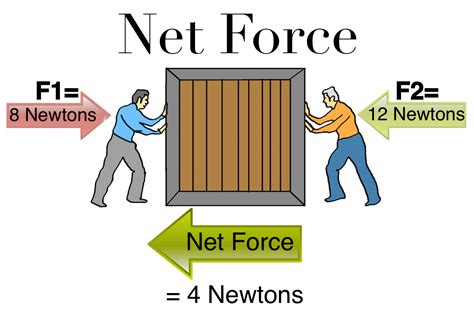
In essence, the net force is the single equivalent force that results from all the individual forces acting on an object. It’s a crucial aspect in determining how an object will move or stay in place. When the net force is zero, the object either stays at rest or moves with constant velocity – a principle defined by Newton's First Law. Understanding and finding the net force will equip you with the skills to predict and explain motion.
Quick Reference Guide
Quick Reference
- Immediate action item: Draw a free-body diagram for the object to visualize all the forces acting on it.
- Essential tip: Break down each force into its component form if they are not aligned along the same axis.
- Common mistake to avoid: Forgetting to consider the direction of each force. Always apply vector addition.
Detailed Steps to Find the Net Force
To find the net force acting on an object, you must systematically go through each step to ensure accuracy. Here is a comprehensive, step-by-step guide:
Step 1: Draw a Free-Body Diagram
A free-body diagram is a crucial first step in understanding the forces acting on an object. It’s a simple sketch that includes the object and all the forces acting upon it.
- Identify the object and place it on the diagram.
- Draw arrows to represent each force acting on the object.
- Label each arrow with the force it represents (e.g., Fgravity, Fnormal, Ffriction).
This visual representation will help you grasp the complexity and interplay of various forces more easily.
Step 2: Resolve Forces into Components
If the forces are not aligned in the same direction, they need to be resolved into their respective components. This is crucial for vector addition.
- Identify the angle at which each force acts from the horizontal or vertical axis, depending on your coordinate system.
- Use trigonometric functions (sine and cosine) to break each force into its x-component (Fx) and y-component (Fy).
For example, if a force F acts at an angle θ with the horizontal, its components are:
- Fx = F * cos(θ)
- Fy = F * sin(θ)
This step is essential for accurate calculation of net force in multi-directional scenarios.
Step 3: Add Components of Forces Vectorially
Once the forces are resolved into their components, the next step is to add them up vectorially.
- Separately sum up the x-components of all forces to get the total x-component (Fnet,x).
- Similarly, sum up the y-components to get the total y-component (Fnet,y).
This vector addition is crucial as it accounts for both the magnitude and direction of each force.
Step 4: Calculate the Magnitude and Direction of the Net Force
After summing up the components, you can determine the net force by applying the Pythagorean theorem and trigonometry.
- Calculate the magnitude of the net force using: Fnet = √(Fnet,x2 + Fnet,y2)
- Determine the direction using the tangent function: tan(θ) = Fnet,y / Fnet,x
This step gives you the complete net force vector, which can be used to understand the motion of the object.
Practical FAQ
What should I do if the forces acting on an object are not balanced?
If the net force is not zero, the object will experience acceleration according to Newton’s Second Law, F = ma. To find the acceleration:
- Calculate the net force using the steps outlined above.
- Apply Newton’s Second Law, F = ma, where m is the mass of the object and a is the resulting acceleration.
- Rearrange the equation to find acceleration: a = F / m.
This gives you a clear understanding of how much the object will accelerate in the direction of the net force.
Tips, Best Practices, and How-To Information
Here are some practical tips and best practices to ensure you find the net force accurately:
- Always check your units: Ensure that all forces and distances are in consistent units (e.g., Newtons for force, meters for distance).
- Use technology: Leverage software tools like simulation programs or graphing calculators for complex calculations.
- Double-check your calculations: It’s easy to make errors in manual calculations. Always verify each step to avoid mistakes.
- Practice with real-world examples: Apply these steps to everyday situations to build a practical understanding.
By adhering to these practices, you’ll enhance your precision and confidence in finding the net force.
Advanced Techniques and Applications
Once you’ve mastered the basic methods, you can explore more advanced techniques to further refine your skills:
- Lagrangian and Hamiltonian mechanics: For more complex systems, consider using these advanced methods which offer powerful tools for analyzing motion.
- Vector fields: Understand how to work with vector fields for scenarios involving distributed forces.
- Dynamic systems: Explore how forces interact over time in dynamic systems.
Each of these techniques builds on the foundational knowledge of finding net force, offering deeper insights into the physical world.
In conclusion, finding the net force involves understanding the forces acting on an object, breaking them down into components, and vectorially adding them. This guide has equipped you with practical steps, tips, and solutions to tackle any force-related problem with confidence and precision. With continued practice and exploration of advanced topics, you’ll master this fundamental concept in physics.