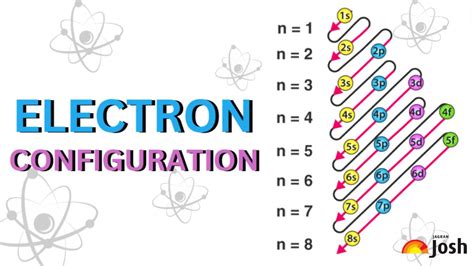
Introduction to Electron Configuration
Understanding electron configuration is crucial for anyone studying chemistry or related fields. Electron configuration determines how elements behave chemically and plays a pivotal role in understanding chemical bonding and reactivity. However, it can seem daunting to some, especially with the multitude of rules and exceptions that govern it. This guide will simplify the process, providing you with step-by-step guidance and practical examples to ensure you grasp the concept thoroughly. Whether you’re a student, a professional, or simply curious, this guide aims to demystify electron configuration and help you apply it confidently.
Understanding the Basics
Electron configuration involves arranging electrons around an atom’s nucleus in a systematic way. It’s the foundation for understanding atomic structure and chemistry. At its core, the configuration helps us determine the energy levels, or shells, in which electrons reside, and their respective sublevels or orbitals.
Problem-Solution Opening Addressing User Needs
Many people find electron configuration complex and intimidating due to the various rules and exceptions involved. This guide aims to address these challenges by breaking down the process into easy-to-follow steps and using real-world examples to clarify each concept. By the end of this guide, you’ll not only understand electron configuration but also be able to apply it to predict chemical behavior and understand the periodic table’s structure.
Quick Reference
- Immediate action item: Write down the atomic number of an element to know the total number of electrons.
- Essential tip: Use the Aufbau principle to fill orbitals with electrons starting from the lowest energy level to the highest.
- Common mistake to avoid: Confusing the order of filling sublevels; remember the sequence 1s, 2s, 2p, 3s, 3p, 4s, 3d, and so forth.
The Aufbau Principle
The Aufbau principle is a fundamental rule that dictates the order in which electrons fill atomic orbitals. It essentially states that electrons occupy the lowest energy orbital available. Here’s how to apply the Aufbau principle in practice:
Step-by-Step Guide to Applying the Aufbau Principle
Let’s break down the application of the Aufbau principle into manageable steps:
- Determine the atomic number: First, identify the atomic number of the element, which corresponds to the total number of electrons in a neutral atom. For example, carbon has an atomic number of 6, meaning it has six electrons.
- Understand the order of orbital filling: According to the Aufbau principle, electrons fill orbitals starting from the lowest energy level to the highest. The sequence is as follows: 1s, 2s, 2p, 3s, 3p, 4s, 3d, and so on.
- Fill orbitals sequentially: Start with the 1s orbital, which can hold up to two electrons. Once it’s filled, move to the 2s orbital, then to the 2p orbitals (which can hold up to six electrons).
- Check for complete sublevels: As you fill orbitals, you’ll eventually reach configurations where sublevels are completely filled (like 2p^6). At this point, consider moving to the next principal energy level.
- Utilize electron configuration notation: Once you’ve filled the orbitals, write down the electron configuration notation. For carbon (atomic number 6), the configuration is 1s^2 2s^2 2p^2.
Periodic Trends and Electron Configuration
Understanding how electron configuration relates to periodic trends can help predict and explain various properties of elements. Here’s a detailed exploration of this relationship:
Detailed How-To: Predicting Periodic Trends
Predicting periodic trends based on electron configuration requires understanding several key concepts:
- Ionization Energy: This is the energy required to remove an electron from an atom. Elements with higher ionization energies are typically found in the upper right of the periodic table, such as noble gases. Lower ionization energies are common among alkali metals in the lower left.
- Electronegativity: This measures an atom’s ability to attract electrons in a bond. Higher electronegativities are observed in nonmetals (e.g., fluorine), while metals (e.g., sodium) have lower electronegativities.
- Atomic Radius: The atomic radius tends to decrease across a period from left to right due to increasing nuclear charge pulling electrons closer. Conversely, it increases down a group as electrons occupy higher energy levels, experiencing more shielding.
- Electron Affinity: This is the energy change when an electron is added to an atom. It’s generally more negative for nonmetals and less for metals. This concept helps explain reactivity and the formation of ions.
- Example Application: Consider chlorine (atomic number 17). Its electron configuration is 1s^2 2s^2 2p^6 3s^2 3p^5. We know chlorine is in Group 17, suggesting it has seven valence electrons in its 3p orbital. This high number of valence electrons explains its high electronegativity and strong tendency to gain an electron to achieve a stable configuration.
Advanced Configurations and Exceptions
Occasionally, electron configurations don’t follow the standard Aufbau principle due to stability exceptions, primarily when half-filled or fully-filled sublevels are achieved. Let’s delve into these exceptions:
Detailed How-To: Addressing Configuration Exceptions
Here’s a detailed breakdown of how to identify and handle these exceptions:
- Identify full or half-filled sublevels: Full or half-filled sublevels provide extra stability. For instance, half-filled 3d^5 or 4s^1 is more stable than other configurations.
- Review common exceptions:
Element Expected Config Actual Config Chromium (Cr) [Ar] 4s^2 3d^4 [Ar] 3d^5 4s^1 Copper (Cu) [Ar] 4s^2 3d^9 [Ar] 4s^1 3d^10 - Utilize Hund's Rule: When filling degenerate orbitals (orbitals of equal energy), place one electron in each orbital with parallel spins until all are half-filled. This maximizes stability.
- Understand crystal field stabilization: In transition metals, configurations with extra stability due to electron pairing in d orbitals (e.g., 3d^10) often occur.
- Practical example: Consider nickel (Ni), atomic number 28. Expected configuration is [Ar] 4s^2 3d^8. However, actual configuration is [Ar] 4s^2 3d^10 because filling all 3d orbitals gives extra stability.
What is the easiest way to remember the order of orbital filling?
The easiest way to remember the order is to use the mnemonic "Pauli’s Arrow", which stands for the sequence: 1s, 2s, 2p, 3s, 3p, 4s, 3d, 4p, 5s, 4d, 5p, 6s, 4f, 5d, 6p, 7s, 5f, 6d, 7p.