Are you feeling overwhelmed by the intricacies of interpreting an H-NMR (Hydrogen Nuclear Magnetic Resonance) chart? You're not alone! Navigating the world of H-NMR can be daunting, especially when you're trying to extract meaningful insights from complex data. This guide is here to simplify your journey, providing you with actionable steps to unlock the full potential of your H-NMR charts. We'll cover everything from basic principles to advanced analysis techniques, ensuring you become proficient and confident in interpreting these vital scientific tools.
Understanding the Basics: Your First Step
Before diving into the depths of H-NMR interpretation, it’s crucial to understand the basic principles that govern how these charts are constructed and what they represent.
H-NMR charts are graphical representations of the magnetic properties of hydrogen nuclei in a molecule when subjected to a magnetic field. Each line or peak on the chart corresponds to a hydrogen atom with a specific chemical environment. Understanding the position, height, and shape of these peaks allows chemists to deduce the structure of the molecule in question.
Let’s start by looking at the main components of an H-NMR chart:
- Chemical Shift: The position of a peak on the chart, measured in parts per million (ppm). It indicates the environment of the hydrogen atom.
- Integration: The area under a peak, which is proportional to the number of hydrogen atoms contributing to that peak.
- Multiplicity: The splitting pattern of a peak, showing how the hydrogen atoms interact with their neighboring hydrogen atoms.
Quick Reference Guide
Quick Reference
- Immediate action item: Start by identifying the chemical shift of key peaks to determine functional groups in your compound.
- Essential tip: Always check the integration values to count the number of hydrogen atoms contributing to each peak.
- Common mistake to avoid: Overlooking the multiplicity and assuming all peaks are singlets.
Step-by-Step Analysis: Decoding Your Chart
Now that you’re familiar with the basics, let’s dive into a step-by-step process for decoding an H-NMR chart. This guide will take you through the essential steps and advanced techniques to become proficient in interpreting these charts.
Step 1: Examine the Chemical Shifts
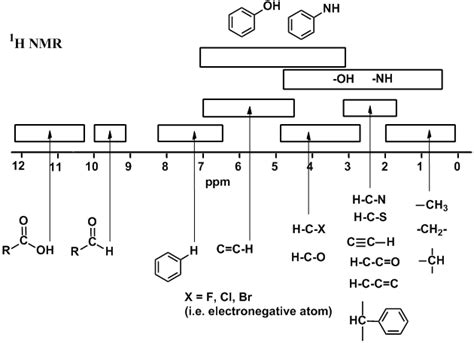
Chemical shifts provide valuable information about the environment of hydrogen atoms within a molecule. Here’s how to interpret them:
- Alkenes: Typically found around 4.6 to 6.0 ppm.
- Aromatic hydrogens: Usually appear between 6.5 to 8.0 ppm.
- Alcoholic hydroxyl groups: Show up in the range of 1.0 to 5.0 ppm, depending on hydrogen bonding.
For example, if you see a peak at around 7.2 ppm, you’re likely looking at aromatic hydrogen atoms.
Step 2: Check the Integration Values
Integration tells you how many hydrogen atoms contribute to a peak. To do this accurately:
1. Zoom in on the area of the chart containing the peak of interest.
2. Measure the area under the peak relative to other peaks. Most software provides a tool to do this easily.
3. Normalize the values to the simplest whole number ratio to determine the exact count.
For example, if a peak integrates to 3 times the area of another peak, it indicates there are three times as many hydrogen atoms contributing to that peak.
Step 3: Analyze Multiplicity (Splitting Patterns)
Multiplicity reveals how a hydrogen atom interacts with its neighboring hydrogen atoms:
- Singlet: No neighboring hydrogens (n+1=1).
- Doublet: Two neighboring hydrogens (n+1=2).
- Triplet: Three neighboring hydrogens (n+1=3).
For instance, if a peak is a doublet, it means the hydrogen atom in question has two neighboring hydrogen atoms.
Advanced Techniques: Going Beyond Basic Interpretation
Once you’re comfortable with basic interpretation, you can explore advanced techniques to extract more detailed information:
J-Coupling Analysis
J-coupling (or coupling constant) provides insight into the interaction between neighboring hydrogen atoms. To analyze it:
- Measure the separation between the peaks in a multiplet (in Hz).
- This value, known as the coupling constant (J), helps deduce the interaction between specific hydrogen atoms.
For example, if the separation between peaks in a doublet is 7 Hz, it’s a clue that the hydrogen atom has two neighboring atoms, with a coupling constant of 7 Hz.
Two-Dimensional NMR Techniques
For more complex molecules, two-dimensional (2D) NMR techniques like COSY (Correlation Spectroscopy) and HSQC (Heteronuclear Single Quantum Coherence) can provide even more detailed information:
- COSY: Maps correlations between directly coupled hydrogen atoms.
- HSQC: Correlates hydrogen atoms with their directly bonded carbon atoms, aiding in structure elucidation.
These techniques can unravel the complex interactions in large or structurally complicated molecules.
Practical FAQ
I’m seeing some unexpected peaks in my H-NMR chart. What could they mean?
Unexpected peaks can be due to several factors:
- Impurities: Contaminants or solvents used in the sample can introduce additional peaks.
- Deuterated solvents: If you’re using deuterated solvents like CDCl3, the solvent peaks will appear at characteristic chemical shifts.
- Isomers: Different isomers of your compound might produce additional peaks if present.
Always ensure your sample is pure, and identify unexpected peaks to rule out these possibilities.
How can I improve the resolution of my H-NMR chart?
Improving the resolution of your H-NMR chart involves optimizing several factors:
- Sample preparation: Use high-purity solvents and ensure minimal contamination.
- Instrument calibration: Regularly calibrate your NMR instrument for the best results.
- Spectral width and acquisition time: Adjust these parameters to balance resolution and acquisition time.
- Pulse sequence optimization: Use the appropriate pulse sequence for your specific analysis.
Fine-tuning these aspects can lead to clearer, more defined peaks.
Conclusion
Interpreting H-NMR charts can seem like a daunting task, but with the right guidance and practice, it becomes a powerful tool in your scientific arsenal. This guide provides a structured approach to decoding H-NMR charts, from basic principles to advanced techniques. By following these steps and tips, you’ll be able to extract valuable insights from complex data, leading to better understanding and analysis of your compounds. Happy interpreting!