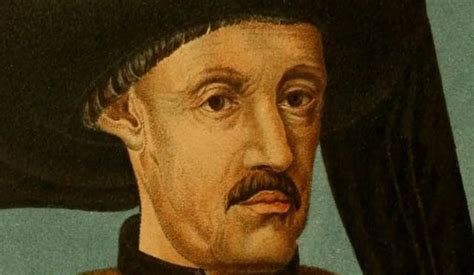
The exploration era of the 15th century was a time of great adventure and significant transformation, led by the pioneering efforts of figures like Henry the Navigator. Born in 1394, Henry, Prince of Portugal, played a pivotal role in the early days of the Portuguese Empire and its ventures into the Atlantic. His vision and leadership significantly advanced maritime exploration, which has left an indelible mark on global history.
A Visionary Leader
Henry the Navigator, often celebrated as a pioneer in maritime exploration, was instrumental in developing advanced navigation techniques and shipbuilding. Under his influence, Portugal transformed from a minor European kingdom into a dominant maritime power. With his support, Portuguese explorers ventured into unknown waters, paving the way for the Age of Discovery. Henry’s primary focus was not only on discovery but also on fostering economic growth through trade and the establishment of new colonial outposts.Technological Advancements
Henry was at the forefront of promoting technological advancements in navigation and shipbuilding. He founded the School of Navigation in Sagres, which became a renowned center of maritime knowledge. This school brought together mathematicians, astronomers, and cartographers to improve navigational techniques and map the seas. The introduction of the caravel, a highly maneuverable ship, was one of the key developments attributed to this era. The caravel’s design allowed for longer voyages and greater flexibility in oceanic exploration, enabling explorers to sail closer to the wind and cover vast distances.Key Insights
- Henry the Navigator was a key figure in advancing maritime exploration during the Portuguese Empire.
- He played a crucial role in technological advancements in navigation and shipbuilding.
- Henry’s vision led to significant economic growth through trade and colonial expansion.
The Impact of Henry’s Endeavors
Henry’s initiatives profoundly impacted global trade routes and colonial strategies. His efforts in navigation and cartography contributed to the development of more accurate maps, which were essential for future expeditions. The practical application of these advancements enabled European powers to establish a network of trade routes that spanned continents, fundamentally altering the global economic landscape. The wealth generated from these ventures funded further exploration and set the stage for the eventual globalization of trade.Legacy of Henry the Navigator
The legacy of Henry the Navigator extends beyond his immediate accomplishments; he symbolizes the spirit of exploration and the relentless pursuit of knowledge. His contributions laid the groundwork for future explorers, such as Vasco da Gama and Christopher Columbus, who would later build upon his discoveries. Henry’s influence can still be felt today, as the techniques and innovations he championed continue to inform modern maritime and navigational practices.What role did Henry the Navigator play in the Age of Discovery?
Henry the Navigator played a critical role in the Age of Discovery by spearheading advances in navigation and exploration. He established the School of Navigation in Sagres, which trained skilled navigators and cartographers. His efforts significantly improved shipbuilding techniques, particularly with the development of the caravel, enabling more extensive and efficient maritime exploration.
While Henry the Navigator’s era left an invaluable legacy, his work remains a testament to the impact that visionary leadership can have on global exploration and economic development. His innovations and strategic focus on maritime prowess not only transformed the Portuguese Empire but also shaped the course of world history.