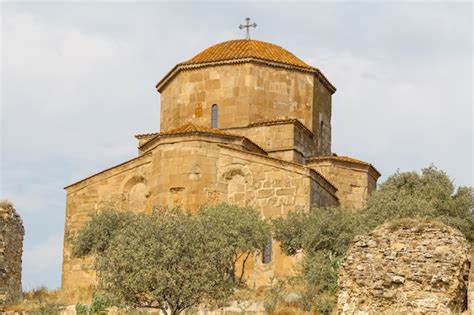
The Georgian Orthodox Church, steeped in history and spiritual depth, serves as a significant cultural and religious beacon for millions around the globe. With roots tracing back to the early days of Christianity, it embodies a unique blend of ancient traditions and modern spiritualism. This article delves into the profound significance and enduring heritage of this ancient institution, offering expert insights into its historical, cultural, and spiritual dimensions.
Historical Foundations and Cultural Legacy
The Georgian Orthodox Church has its origins in the early fourth century, when Saint Nino, a woman of Jewish-Greek descent, is credited with converting King Mirian III and the kingdom of Iberia (modern-day Georgia) to Christianity. This pivotal event marks the church’s inception and sets the stage for its long-standing influence. The church’s early establishment was crucial in forging Georgia’s unique religious identity, distinct from neighboring regions. Throughout its history, the Georgian Orthodox Church has weathered numerous challenges, from political upheavals to external invasions, while steadfastly maintaining its core doctrines and traditions. This resilience is a testament to its cultural significance and the deep-rooted faith of the Georgian people.
A Pillar of Georgian Identity
The Georgian Orthodox Church has always been more than just a religious institution; it has been a cornerstone of Georgian national identity. The church’s influence permeates various aspects of life, including art, music, and everyday rituals. Its numerous monasteries, many of which are UNESCO World Heritage Sites, serve as both spiritual and cultural landmarks. These monasteries are not just places of worship but also repositories of Georgian heritage, housing invaluable manuscripts, artwork, and historical artifacts. The church’s cultural contributions are evident in the elaborate liturgical practices, the rich tapestry of religious iconography, and the traditional Georgian chant, which is an integral part of its services.
Spiritual Practices and Modern Adaptations
The spiritual practices of the Georgian Orthodox Church are deeply rooted in its ancient traditions, yet they have also adapted to meet modern needs. One of the primary practices is the celebration of the divine liturgy, a sacrament that has remained largely unchanged since its inception. This ritual is both a profound act of worship and a communal gathering that reinforces the bonds within the church community. The church places a strong emphasis on the sacraments, which it views as outward expressions of internal faith. Additionally, monastic life continues to play a vital role, with many Georgians seeking solace and spiritual guidance within the monastery walls.
Bridging Tradition and Modernity
While maintaining its traditional practices, the Georgian Orthodox Church has also embraced modern methods of communication and outreach. The church has utilized social media platforms to share its teachings, host online services, and engage with a global audience. This modern approach has helped it to remain relevant in a rapidly changing world, allowing it to share its rich spiritual heritage with a broader audience while preserving its ancient traditions. The church’s adaptability in the digital age exemplifies its commitment to evolving while staying true to its core values.
Key Insights
Key Insights
- The Georgian Orthodox Church’s history is deeply interwoven with the cultural and national identity of Georgia.
- Modern adaptations in communication have helped the church reach a wider audience while preserving its ancient traditions.
- The church’s spiritual practices, rooted in centuries-old traditions, continue to offer profound spiritual guidance.
FAQ Section
What role does the Georgian Orthodox Church play in Georgian society today?
Today, the Georgian Orthodox Church remains a central institution in Georgian society. It influences national identity, cultural practices, and community life. The church is involved in many aspects of civic engagement, education, and social services, acting as a moral and spiritual guide for many Georgians.
How has the Georgian Orthodox Church adapted to modern times?
The Georgian Orthodox Church has embraced modern communication technologies to stay connected with a global audience. It uses social media for outreach, hosts online services, and shares its teachings widely, thus blending its ancient traditions with contemporary methods.
This exploration of the Georgian Orthodox Church reveals a rich tapestry of history, culture, and spirituality that continues to resonate deeply within the hearts of its followers and beyond. The church’s enduring legacy and its adaptability highlight its vital role in both preserving and evolving spiritual practices across the ages.