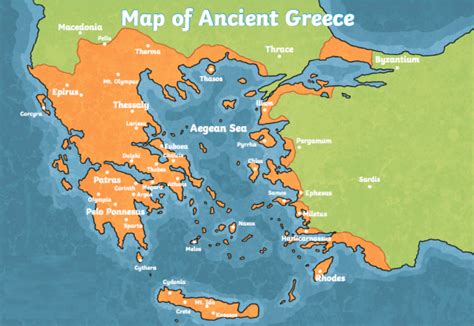
The intricate geography of Ancient Greece played an essential role in shaping its history, culture, and development. Understanding the geographical attributes of this ancient civilization helps us appreciate its unique social structures, economic systems, and political dynamics. Let’s delve into the complexities and significance of Ancient Greece’s geography.
Key Insights
- Ancient Greece’s fragmented landscape contributed to the formation of independent city-states.
- Geographical features such as mountains influenced military strategies and architectural designs.
- The Aegean Sea facilitated trade and cultural exchange, fostering a cosmopolitan society.
Fragmented Terrain and City-States Formation
The rugged and mountainous terrain of Ancient Greece naturally led to the development of isolated communities, which eventually evolved into city-states, or poleis. Mountains, hills, and the lack of extensive plains made traveling difficult, leading inhabitants to remain localized. Consequently, Athens, Sparta, Thebes, and Corinth became distinct entities, each developing unique political systems and cultural identities. This fragmentation was advantageous as it created competitive yet interdependent entities, fostering innovation and diversity.Military Strategy and Architectural Marvels
Geographical considerations were paramount in both military strategy and architecture. The natural defense provided by mountains and cliffs made many Greek cities nearly impregnable. For instance, the city of Athens fortified its position on the Acropolis, a rocky outcrop overlooking the city, which served as a natural fortress. Similarly, the Spartans utilized their mountainous terrain for defensive advantages in warfare. Additionally, the challenging landscape spurred architectural ingenuity. Structures were often built into hillsides or atop cliffs, ensuring stability and enhancing defense, reflecting the resourcefulness shaped by geographic conditions.Maritime Influence and Trade Routes
The Aegean Sea, with its numerous islands and inlets, was a critical factor in the development of Greek civilization. The sea provided a natural conduit for trade and cultural exchange, allowing Ancient Greeks to establish thriving maritime networks. The coastal city-states, such as Piraeus and Corinth, became vital trade hubs. Goods such as olive oil, wine, and pottery were traded across the Aegean and beyond, enriching the Greek economy and facilitating cultural diffusion. The sea also enabled the Greek people to maintain connections with other cultures, fostering a cosmopolitan ethos and contributing to advancements in navigation, shipbuilding, and maritime trade.How did the geography of Ancient Greece influence its colonization efforts?
Ancient Greece’s geography greatly influenced its colonization as the scarcity of arable land and rich resources led to overpopulation in some regions. Seeking new lands for agriculture and trade, Greeks established colonies throughout the Mediterranean and Black Sea regions. The natural advantages of the Aegean Sea facilitated these efforts, allowing colonies like Syracuse in Sicily and Massalia in modern-day Marseille to thrive.
What role did geography play in the military conflicts between city-states?
Geography was pivotal in the military conflicts among Greek city-states, where mountainous terrain often dictated strategic advantages. For example, the high ground and natural defenses of locations like Thermopylae enabled smaller forces, such as the Spartans, to hold off larger Persian armies. Similarly, the fortified city of Athens leveraged its sea access to bolster naval defenses during the Peloponnesian War.
In conclusion, Ancient Greece’s geography was not merely a backdrop but an active participant in shaping its historical trajectory. The fragmented terrain fostered a mosaic of independent city-states, while the strategic advantages of natural defenses and maritime routes influenced military strategies and economic prosperity. Understanding these geographical intricacies provides crucial insights into the resilience and ingenuity of the ancient Greek civilization.