Understanding compound sentences can elevate your writing from basic to more engaging and complex. Often, learners find them challenging due to the necessity of combining two independent clauses seamlessly. This guide will walk you through the essentials, offering actionable advice, real-world examples, and tips to avoid common pitfalls. We will also address specific user pain points to help you master compound sentences efficiently.
Understanding Compound Sentences
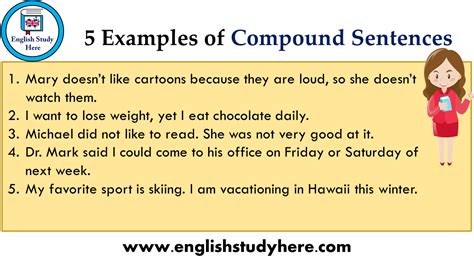
A compound sentence is a type of sentence that joins two independent clauses, which are sentences that can stand alone, using a conjunction or semicolon. Independent clauses have their own subject and predicate but can be linked to form a more intricate sentence structure.
For instance:
I love hiking, and my friend enjoys swimming.
Here, both “I love hiking” and “my friend enjoys swimming” are independent clauses. The word “and” joins them into a compound sentence.
Quick Reference
Quick Reference
- Immediate action item with clear benefit: Start using coordinating conjunctions (for, and, nor, but, or, yet, so) to join your independent clauses.
- Essential tip with step-by-step guidance: When combining two independent clauses, ensure that your sentences flow naturally and maintain clear connections.
- Common mistake to avoid with solution: Overusing commas; remember that a comma alone cannot join two independent clauses (this is a comma splice). Use conjunctions or semicolons instead.
How to Create Compound Sentences
Creating effective compound sentences involves several steps:
- Identify your independent clauses: Before you can combine clauses to form a compound sentence, you must first recognize your independent clauses. These are complete thoughts that can stand alone.
- Use coordinating conjunctions: Once you’ve identified your clauses, use a coordinating conjunction to link them. The acronym FANBOYS helps you remember these conjunctions: For, And, Nor, But, Or, Yet, So.
Here’s a practical example:
She is an artist, and he is a musician.
In this sentence, “She is an artist” and “he is a musician” are both independent clauses linked by the conjunction “and.”
Another option is to use a semicolon:
The storm was devastating; the town will take months to recover.
In this example, a semicolon connects two related independent clauses without the need for a conjunction.
Next, consider punctuation:
- Commas: Always use a comma before the conjunction when joining two independent clauses. Omitting the comma results in a comma splice, which is incorrect.
- Semicolons: Semicolons can also connect closely related independent clauses without the need for a conjunction.
Advanced Techniques for Compound Sentences
Once you’re comfortable with the basics, you can start experimenting with more advanced structures:
- Using semicolons: You can also use semicolons to join closely related independent clauses without a conjunction. Ensure they are related for smooth reading.
- Incorporating conjunctive adverbs: Words like “however,” “therefore,” and “nevertheless” can be used to create more complex links.
Here’s an example:
The project was a failure; however, the team learned valuable lessons.
This sentence combines two independent clauses where “however” acts as a conjunctive adverb.
Common Mistakes and How to Avoid Them
While forming compound sentences, some common mistakes occur that can disrupt the flow and readability of your writing:
- Mistake: Using a comma splice: Inserting a comma between two independent clauses without a conjunction is incorrect. Example:
Incorrect: She decided to move abroad, she missed her family.
- Correction: Use a coordinating conjunction or a semicolon:
Correct: She decided to move abroad, but she missed her family.
Correct: She decided to move abroad; she missed her family.
Another common error is overusing conjunctions:
- Mistake: Overusing ‘and’ or other conjunctions: This can make your sentence feel awkward and monotonous.
- Correction: Mix in semicolons or vary the conjunctions used.
Example:
Incorrect: He loved to play football, and he enjoyed swimming, and he was good at both.
Correct:
He loved to play football and swim, both of which he excelled at.
FAQ
What is the difference between a compound and complex sentence?
A compound sentence joins two independent clauses using a conjunction or semicolon, as in “She enjoys reading, and he likes writing.” A complex sentence includes an independent clause and a dependent clause, such as “Although she enjoys reading, she still finds time to write.”
Can I use semicolons without conjunctions to create compound sentences?
Yes, semicolons can connect two closely related independent clauses without a conjunction. Ensure they are related for smooth reading. For example: "The report was due; the team had not finished yet."
How do I avoid sounding repetitive in compound sentences?
Vary your conjunctions and structure. Use a mix of coordinating conjunctions, semicolons, and conjunctive adverbs. For example: "She wanted to stay; however, she had work in the morning. Alternatively, she could wake up early; either way, she would achieve her goals."
By mastering the art of creating and understanding compound sentences, you’ll improve your writing’s clarity and depth. Follow these steps, and avoid common mistakes to ensure your sentences are effective and engaging.