Unraveling Drive Reduction Theory: Understanding Behavioral Motivations
Understanding the underlying principles of human behavior can be a complex endeavor, especially when delving into the various theories that attempt to explain motivation and drive. One such theory that holds significant importance in the study of psychology is the Drive Reduction Theory. Developed by Clark Hull, this theory posits that individuals are motivated to maintain homeostasis, a state of physiological equilibrium. In this article, we aim to elucidate the complexities of Drive Reduction Theory, providing practical insights into its application in understanding human motivations.
Key Insights
Key Insights
- Drive Reduction Theory emphasizes the concept of homeostasis to explain behavior.
- The theory suggests that biological drives lead to behavior aimed at reducing these drives.
- Practical applications include understanding behaviors in areas like stress management and consumer psychology.
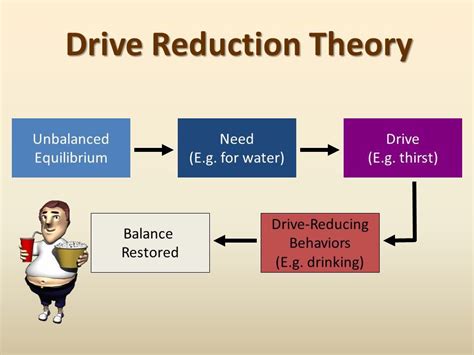
The essence of Drive Reduction Theory lies in its straightforward premise: behaviors are driven by the need to reduce internal states of tension. When an individual experiences a need, such as hunger or thirst, this triggers an internal drive that compels the individual to engage in behaviors designed to fulfill that need. For example, when someone is thirsty, the internal drive for hydration leads to the behavior of drinking water, thus reducing the initial drive and restoring homeostasis.
The Role of Biological Drives
The Mechanism Behind Biological Drives
At the heart of Drive Reduction Theory is the role of biological drives, which are instinctual responses to maintain homeostasis. These drives are triggered by physiological needs, such as hunger, thirst, and the need for sex. According to Hull, these drives produce an excitatory drive that prompts behavioral responses. For instance, a person feeling hungry will experience a biological drive that results in the motivation to search for food. This drive theory aligns with observable behaviors that can be analyzed to understand deeper motivational patterns.The Impact on Human Behavior
Behavioral Patterns and Drive Reduction
Drive Reduction Theory also sheds light on how environmental factors interact with biological drives to shape behavior. For example, when the environment provides cues like a smell of food cooking, it can intensify the drive to eat. The theory posits that once a behavior is initiated to satisfy a drive, the behavior continues until the drive is reduced to its minimal level. This can explain a wide range of behaviors, from basic survival actions to more complex social interactions. For instance, an individual feeling stressed might engage in activities like exercise or spending time with friends to reduce the drive associated with stress, thereby achieving a state of equilibrium.FAQ Section
How does Drive Reduction Theory apply to modern consumer psychology?
Drive Reduction Theory is instrumental in understanding consumer behavior. Companies leverage this by creating products that address fundamental drives like hunger and thirst. Marketing strategies often tap into these biological drives by appealing to consumers’ basic needs, thus motivating purchases.
Can Drive Reduction Theory be used to explain motivation in sports?
Absolutely, Drive Reduction Theory can explain athlete behavior well. The drive to avoid fatigue or injury, for instance, motivates athletes to train rigorously and adopt healthy habits, with the ultimate aim of reducing these internal drives and achieving optimal performance.
Drive Reduction Theory provides a valuable framework for understanding the fundamental motivations behind human behaviors. By focusing on the interplay between biological drives and environmental stimuli, this theory offers insights into both simple and complex behavioral patterns. Practical applications span various fields, from psychology to marketing, making it a robust concept for analyzing and predicting behavior.
As we conclude, it’s clear that Drive Reduction Theory remains an essential concept in the realm of behavioral psychology, offering a clear, evidence-based understanding of the motivations that guide human actions.