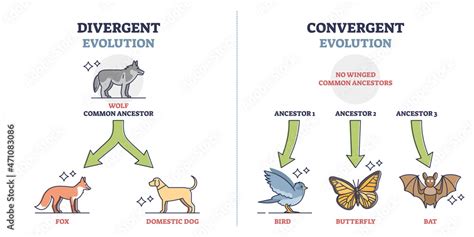
Divergent vs Convergent Evolution: Evolution’s Twin Paths
Evolution is a grand journey that unfolds in myriad ways, and two prominent paths it often takes are divergent and convergent evolution. These mechanisms help us understand how life adapts, modifies, and sometimes mimics in response to environmental pressures and opportunities. As a biologist, evolutionary enthusiast, or someone simply curious about the mechanisms behind species adaptation, this guide dives into both concepts with practical insights, actionable advice, and a problem-solving focus to address your needs.
Let's begin by addressing a common concern many scientists encounter: understanding the difference between divergent and convergent evolution and how these processes influence species over time.
Understanding Divergent Evolution
Divergent evolution occurs when two or more closely related species evolve different characteristics over time. This process typically happens because these species are adapting to different environments or niches. For example, when a single ancestral species splits into two separate lineages due to geographic isolation, each lineage may evolve distinct traits to better suit its unique habitat.
A classic example of divergent evolution is the case of the Galápagos finches studied by Charles Darwin. The finches on different islands, despite sharing a common ancestor, have developed varying beak shapes and sizes according to the specific food sources available on each island.
Quick Reference
Quick Reference
- Immediate action item: Study the examples of finches or cichlids from different lakes to understand how geographical isolation can lead to divergent evolution.
- Essential tip: Pay attention to changes in traits that enable species to exploit different resources, which is a hallmark of divergent evolution.
- Common mistake to avoid: Confusing convergent evolution with divergent evolution. Remember, convergent evolution refers to unrelated species evolving similar traits due to similar environmental pressures.
Step-by-Step Guidance on Identifying Divergent Evolution
To grasp divergent evolution, let's follow a step-by-step approach:
- Step 1: Identify a common ancestor. Look for species that share a common ancestor but inhabit different environments.
- Step 2: Observe adaptations. Check how each species has adapted to its specific environment. Note any significant differences in traits such as size, shape, or function.
- Step 3: Compare lineages. Determine whether the species' divergences correlate with differences in their environments or niches.
- Step 4: Document evidence. Collect data from scientific studies, fossil records, and anatomical comparisons to build a case for divergent evolution.
Practical Example: Darwin's Finches
Let's take Darwin's finches on the Galápagos Islands as a practical example of divergent evolution:
Originally, a single finch species colonized the islands, and over time, they evolved into several distinct species, each with a specialized beak shape suited for the specific food sources available on their island. For instance, finches on islands with hard, large seeds have developed larger, stronger beaks, while those with access to soft, insect-based diets have evolved slender beaks for pecking.
Understanding Convergent Evolution
Convergent evolution, on the other hand, involves unrelated species independently developing similar traits as a result of having to adapt to similar environments or ecological niches. This results in analogous structures, which are not inherited from a common ancestor but arise due to similar selective pressures.
One famous example of convergent evolution is the wings of birds and bats. Though these wings have evolved independently in different lineages, they serve the same function – flight – thus allowing these animals to exploit the aerial niche.
Quick Reference
Quick Reference
- Immediate action item: Compare wings of birds and bats to understand convergent evolution.
- Essential tip: Focus on how similar environmental pressures can drive the independent evolution of similar traits.
- Common mistake to avoid: Do not confuse convergent evolution with parallel evolution, which occurs in related species that independently evolve similar traits due to shared ancestry.
Step-by-Step Guidance on Identifying Convergent Evolution
Here’s a step-by-step guide to identify convergent evolution:
- Step 1: Identify unrelated species. Start by selecting species that are not closely related but live in similar environments.
- Step 2: Look for similar traits. Determine if these species share similar traits that serve the same function.
- Step 3: Rule out common ancestry. Ensure the species do not share a common ancestor to confirm that the trait is not inherited.
- Step 4: Confirm similar environments. Check if the similar traits evolved due to the similar environmental pressures faced by these species.
Practical Example: Shark and Dolphin Bodies
Consider the bodies of sharks and dolphins:
Though sharks are fish and dolphins are mammals, both have evolved streamlined bodies with similar shapes. This adaptation is due to the similar aquatic environments they occupy. This example showcases how different species can develop similar traits to optimize their survival and efficiency in the water.
Addressing Common Questions
Here are answers to common questions that might help you further understand these fascinating evolutionary processes:
Can convergent evolution occur in unrelated species that share a common ancestor?
No, convergent evolution involves unrelated species developing similar traits independently. This is different from cases where related species share traits due to common ancestry. An example of the latter is not convergent but rather parallel evolution.
How can one determine if observed traits are due to convergent evolution or just random mutations?
To determine if traits have evolved due to convergent evolution, scientists look for independent evolution of similar traits in unrelated species that live in similar environments. Genetic, anatomical, and behavioral evidence is also crucial. By comparing species' DNA, observing their ecological roles, and studying their evolutionary history, researchers can distinguish convergent evolution from random mutations.
Why do convergent and divergent evolution occur?
Convergent evolution occurs because unrelated species face similar environmental pressures and, thus, independently evolve similar traits to survive and thrive in their environments. Divergent evolution happens when species split and adapt to different environments or niches, leading them to evolve distinct characteristics. Both processes highlight nature's creativity in adapting life to changing environments.
By focusing on both divergent and convergent evolution, we can appreciate the incredible variety and adaptability of life on Earth. Understanding these processes enriches our comprehension of biology and evolution, highlighting the dynamic interplay between species and their environments.
Hope this guide helps you explore the fascinating world of evolutionary biology with practical insights and clear guidance!